In the latest edition of the SilverDoor Market Update, we reported feedback suggesting that expense policies aren't always keeping pace with the lifestyle preferences of corporates staying in a serviced apartment. It’s well known that staying in a serviced apartment offers a different lifestyle to staying in a hotel, which can impact the overall cost of a trip, but how many corporate expense policies are flexible enough to account for these differences?
We wanted to explore this topic in more detail. Using research into traveller demographics, cost of living, and nutrition-based productivity, this article discusses whether subsistence allowances need an update to reflect both the needs of today’s business traveller and the variety of lifestyles they can choose in the modern temporary accommodation market.

Choosing the Right Food & Beverage Expense Policy for Your Business
There’s plenty to consider when setting a fair policy for anything in your business. Policies need to serve both employer and employee: being flexible and reasonable enough for employees to follow, while protecting the employer from legal or regulatory violations.
When it comes to subsistence allowances, a policy is ultimately needed to ensure businesses are abiding by tax regulation (enforced by HMRC in the UK and the IRS in the States, for example). There is a degree of flexibility for how a business can set their allowances, including:
- Per diem: a fixed allowance for each day of the trip.
- Per meal: an allowance for breakfast, an allowance for lunch, and an allowance for dinner.
- Location specific: different daily or per meal allowances depending on the costs of living in the destination city, for example a larger budget would be needed for London compared to Lancaster.
- Trip type specific: some job roles or departments might have higher allowances for client engagement; however, this sort of spending could be assigned to a different budget.

Are F&B Expense Policies Keeping Pace with the Priorities of Today's Traveller?
The continued increased adoption of corporate housing, aparthotels, serviced apartments and co-living accommodation models points to a shift in traveller expectations, which now focus more on lifestyle. A key driver of corporate serviced accommodation usage is being able to maintain your at-home lifestyle choices and eating routines while travelling for business, which is something you can’t do as easily in a hotel, but are outdated subsistence allowances overlooking it?
Something we’ve noticed is often missing in corporate food and beverage (F&B) expense policies is a reimbursement structure that accounts for grocery shopping. Per diem or per meal allowances often don’t recognise the preference for – or encourage the financial and wellbeing benefits of – buying groceries for an extended corporate trip, instead they’re almost exclusively designed for eating out in a restaurant for every meal.
Let’s say an employee goes to the supermarket on the first day of their seven-night stay in a serviced apartment and spends £50 on groceries, which will cover breakfast, lunch and dinner for at least five days of their trip. If they have a daily subsistence allowance of £35, they will find themselves having to explain and reconcile an overspend on that first day, and at worst could even be left out of pocket, despite having actually reduced overall trip spending, prioritised their wellbeing, and consequently had a more successful trip.
The New Age of Business Traveller
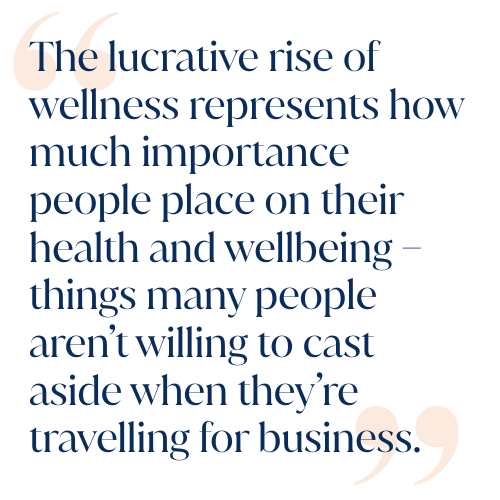
The 2025 wellness industry is estimated to be worth as much as $2 trillion. While self-care is nothing new, the lucrative rise of wellness over recent decades represents how much importance people place on their health and wellbeing – things many people aren’t willing to cast aside when they’re travelling for business. Wellbeing and lifestyle preferences have significant influence on the demand trends of today’s business travellers, and the breadth of choice within the modern temporary accommodation market means wellness routines don’t have to be left at home. Wellness-related accommodation preferences might include an onsite gym to keep up with usual exercise routines or blackout curtains to support healthy sleep patterns, and a serviced apartment with full kitchen is well suited to those keen to maintain their at-home eating habits.
 |
In the way of in-unit appliances, a hotel room will include a fridge, kettle and coffee machine at most. Hotels will more often than not have onsite F&B offerings like a restaurant, bar, or room service options and breakfast is commonly included in the nightly rate, but you’d typically expect to have at least lunch and dinner out during a hotel stay. Ideal for a short trip, but you might not want to eat out for every meal when you’re staying for more than a few days in corporate accommodation on a month-long project, summer internship or year-long secondment. It would be remiss to not also contextualise the current workforce demographic and explore how different generations have different expectations and priorities when it comes to corporate travel and their job in general. Gen Z and millennials are projected to make up 74% of the global workforce by 2030; these generations have grown up in this world of wellness, meaning they more keenly prioritise protecting their physical and mental wellbeing in all areas of their life. |
According to Deloitte, “well-being is critical to Gen Z and millennial happiness both in and outside the workplace” and their recent survey of the cohort found that Gen Z and millennial workers are more likely to report being happy if their workplace fosters better mental health, offers growth opportunities and promotes good work/life balance. When asked about environmental concerns, the report also showed 65% of Gen Zs and 63% of millennials said they had felt worried or anxious about the environment in the past month.
In an AMEX report, 88% of Gen Z and millennial travellers consider corporate travel a perk so these employees might be more likely to travel for business more, but they’ll be travelling in a way that prioritises their wellbeing, their health, and the planet.
The research indicates that, generally speaking, young millennials and Gen Zs place more importance on wellness, healthy lifestyles, and sustainability, but these priorities aren’t exclusively related to the younger generations. Focusing in on the healthy eating aspect of wellbeing, then, what are the productivity, cost saving and sustainability benefits of buying groceries and eating in compared to eating out at a restaurant?
Wellbeing & Productivity: A Healthy Diet for a Healthy Mind
Staying in a serviced apartment means business travellers can buy groceries and cook in their in-unit kitchen just like they would at home, rather than eating out for every meal. This makes it easier to keep up with your usual eating habits and supports a healthy diet, ultimately helping with better energy levels, productivity and mental health. Indeed, research indicates that employees with unhealthy diets are 66% more likely to report lower productivity compared to those who regularly consume whole grains, fruits, and vegetables.
| One study shows that meal prepping increases the nutritional value and variety of a person’s diet, and another shows meal planning and preparation reduces stress levels and promotes better mental health, so there are significant mental and physical wellbeing benefits to stocking your fridge and taking the time to prep your meals at home. | 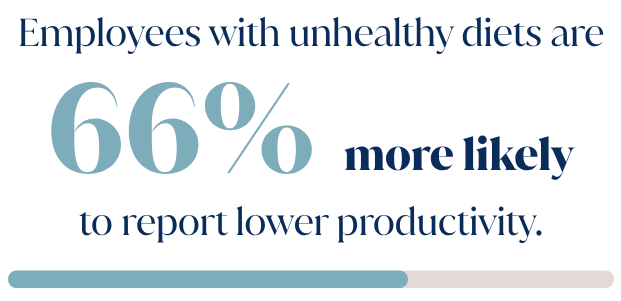 |
Let’s face it, eating out for every meal typically isn’t the healthiest routine. Home-cooked meals tend to be made from fresh, whole foods, so are lower in sodium, unhealthy fats and calories compared to restaurant meals and takeaways. Having good food stocked in your apartment and meals pre-prepared during a business trip will make it easier to stick to healthy routines, but per diem or per meal expense policies are structured almost exclusively for eating out three meals a day for the duration of your trip.
Individual Requirements & Policy Inclusivity: A Safe Space to Cook & Eat
 |
Not only are home-cooked meals usually healthier, but they can also be easier for those with dietary requirements and allergies, or neurodivergent and solo travellers who may find it more challenging to eat in public settings. For those with food intolerances, allergies or preferences, eating in a restaurant is not always a straightforward experience. Being able to buy your own groceries and cook your own meals while away on business might be less daunting and make the prospect of a corporate trip far more attractive. For some neurodivergent people, restaurants can be overstimulating and trigger sensory, social or contamination anxiety. Business travellers who identify as neurodiverse might prefer to eat privately in their corporate accommodation, where they can control their environment (in terms of noise, light, etc.) and avoid the social pressures of eating out. |
Finally, for some solo travellers the idea of eating out at a restaurant might be brilliant as a way to connect with people, but for others it might be a daunting prospect. At least having the option to cook and eat in their apartment means solo travellers can decide for themselves depending on how they’re feeling, and opt to stay in when they’d prefer some alone time.
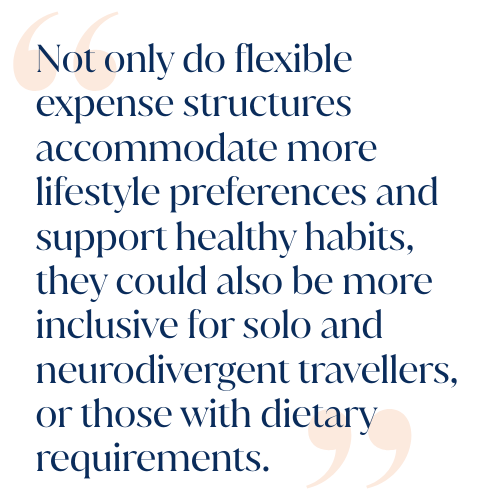
In all cases, corporate expense policies that are more or less designed solely for eating out for every meal – like per meal allowances – could put those people off accepting a business trip opportunity, limiting effective deployment of talent across multinational companies. So, not only do flexible expense structures accommodate more lifestyle preferences and support healthy habits, they could also be more inclusive.
Cost Savings: Home-Cooked Meals are Healthy for Body, Mind & Wallet
According to the current cost of living index, a meal for one at an inexpensive London restaurant will cost £20; $25.50 in New York City. This means dinner-only expenses for a one-week trip will total upwards of £140 in London and $178.50 in NYC.

If you choose to cook and eat in instead, it’s estimated that the average weekly food shop in the UK per person in 2025 is £32. Of course this figure varies depending on age, gender, and will differ between supermarkets, but does represent the significant cost savings of eating in vs eating out for all or a few nights of your business trip.
When staying in a hotel with no in-unit kitchen facilities, travellers have no choice but to eat out for every meal, but staying in a serviced apartment means you have the flexibility to buy groceries for multiple days. Guests also have the option to use recipe boxes like Hello Fresh or Gousto, which are great for reducing food waste and time spent on shopping. Per diem or per meal expense structures can struggle to accommodate preferences to stock the fridge and meal prep: at best limiting the healthy habits of business travellers, and at worst leaving them out of pocket.
Sustainability: Eating at Home Drives Both Cost & Carbon Savings
Eating out at a restaurant occasionally is great, but research shows it’s not as sustainable as cooking at home, so mixing in some home cooking when you can while travelling on business will help to reduce the overall carbon footprint of your trip.
| Up from 13% in 2019, commercial cooking is now estimated to account for 59% of total emissions in London, originating from cooking fuels like charcoal, wood and gas, as well as food preparation such as frying and grilling. On the other hand, WWF suggests that shifting to a healthy and sustainable diet, which focuses on fruits, vegetables, pulses and wholegrains and moderates meat, dairy, fat, salt and sugar, could help to reduce overall global emissions by 36%. | 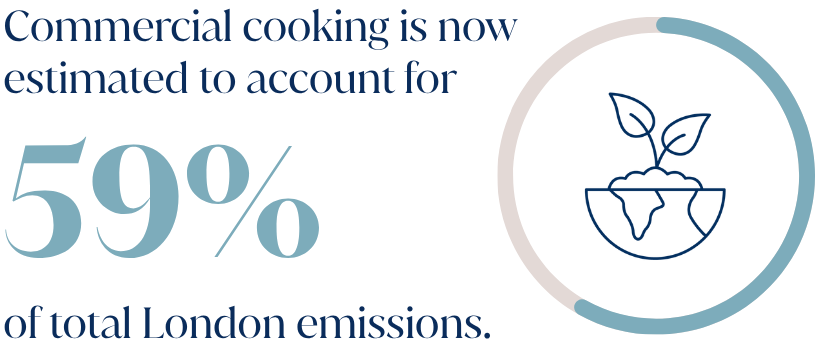 |
Buying groceries for a few days or doing a weekly shop and prepping some meals while away on business means you have more autonomy to make healthy choices, save some money, and help to reduce trip emissions while you’re at it.
Final Food for Thought
You’ve been invited to speak at a conference in Paris, which means a few nights in one of the foodie capitals of Europe. Is it so surprising that some people are tempted to make the most of a daily meal allowance by spending their full “entitlement” every day? As Nick Easen points out in the Autumn Business Travel Magazine, a per diem policy “keeps things simple but it might lead to a ‘use it or lose it’ attitude”.
 |
With per meal or per diem expense structures, some might also take a ‘when in Rome’ approach: it’s there to spend, why not spend it? These policies almost incentivise using a full meal allowance even if you wouldn’t ordinarily eat that way at home, so a policy which accommodates grocery shopping and home-cooked meals could help to encourage a healthier, more sustainable and cost-effective approach to business travel F&B spend. F&B expense policies are important in making sure businesses can track spend effectively and keep on top of subsistence budgets, but it might be worth revisiting the reimbursement structures you have in place if the policy hasn’t been reviewed in a while. You know your people best, so your policy should aim to reflect the needs and wants of as many employees as possible, while also being flexible and inclusive enough for the varied priorities of today’s business traveller. |
Employees should be able to foster a healthy lifestyle during work and on a business trip, or at least maintain the same lifestyle that they have and enjoy at home, so corporate F&B expense policies should support this; it’s better for employee wellbeing and retention, and it’s better for business-level productivity, emission reductions and cost savings.