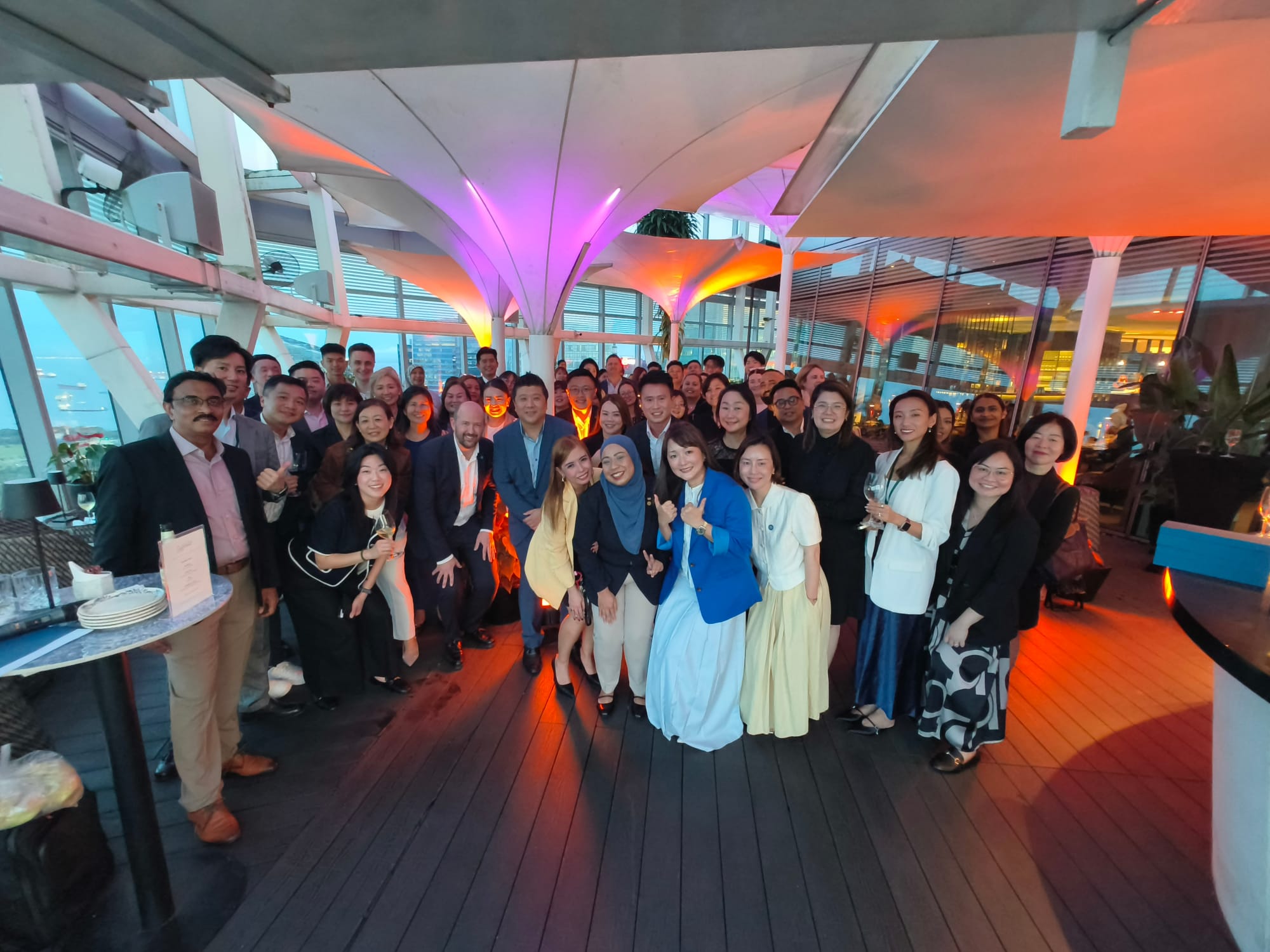
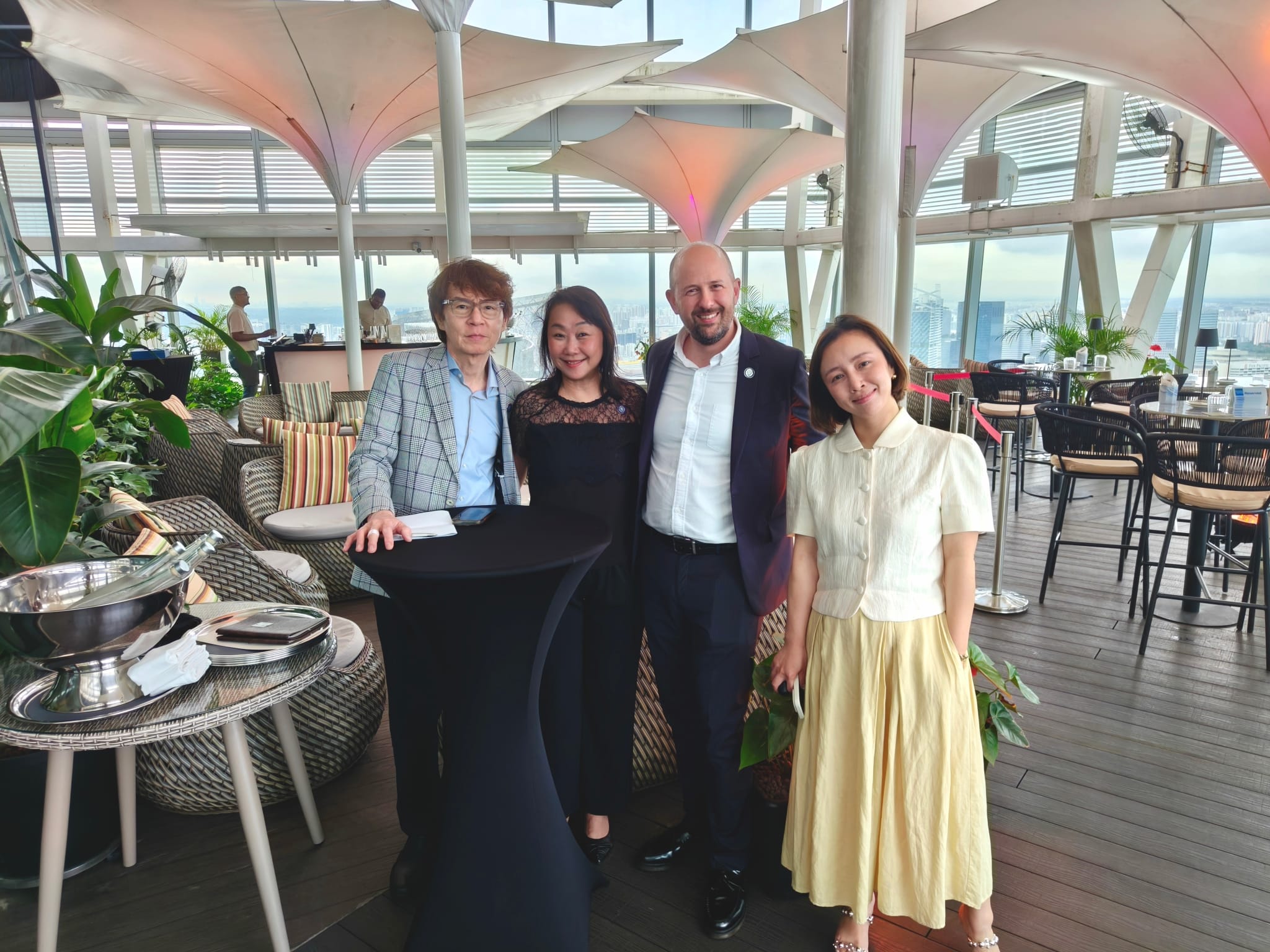
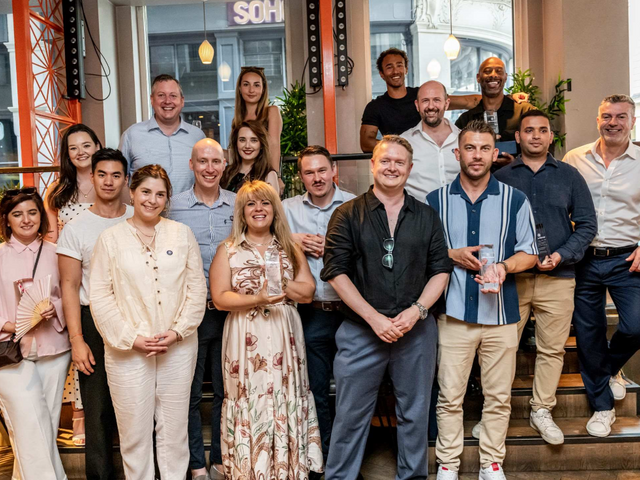
Last week, two of the leading global insight and networking events, GBTA and WERC came together in Singapore to draw out the top-level insights from international industry professionals. In two jam-packed days of sessions and socialising, we learnt everything from the breaking tech compliance tools, to the secret of what suppliers actually want...
-
What buyers prioritise differs radially across markets
Session: Selling Across APAC: Navigating Complexity Market by Market
Speakers: Robert Ambrozy – EVP Global Sales & Business Development at the GBTA, Anja Jia – General Manager of Client Success – East China at Trip.Biz, Anna Fisher – Head of Operations APAC at Gray Dawes Travel, and Sakshi Vij – Managing Director at Carzonrent India Pvt Ltd
With over 50 countries spanning vastly different languages, currencies, regulatory environments, development stages, and buyer cultures, treating APAC as a single addressable market is a strategic error. Every market, China, Japan, Singapore, Vietnam, Australia, India, requires its own approach, its own product configuration, and its own relationship infrastructure to keep up with different currencies and government restrictions.
• China: Digitisation and full system integration first, best-price content second
• Singapore: Governance and programme visibility (as a hub for regional HQs)
• Japan: Operational precision and TMC reliability above all else
• Vietnam: Content access, closely mirroring the China digitisation challenge
• Australia: Experience over numbers; supplier availability is often highly limited
• India: Relationships at the operations level, not just procurement
2. As Geopolitics and climate heats up, so does human-handling demand
Session: The Changing Distribution Landscape
Speakers: Atyab Bhatti – CEO & Co-Founder at Skylink, Cole Thienes – Chief Architect at Skylink, Alison Rogan – Global Head of Travel and Events at HSBC, Becky Power – VP and GM Global Client Management at Amex GBT, and Chon Raman – Head of SAP Concur, APAC, at SAP Concur
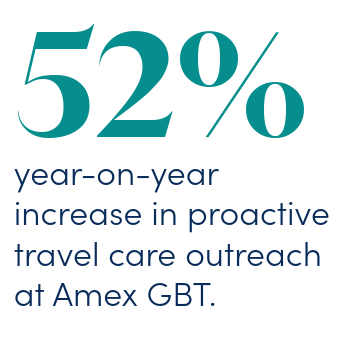
Whilst technology is now handling majority of routine transactions; humans handle disruption, complexity, and emotional moments. This surging increase in proactive travel care reflects how much not only disruption has increased, but how important warm, personal handoffs are when travellers are distressed. The goal is not to remove humans but to free them from routine tasks so they can focus on moments where human judgment and empathy genuinely matter.
3. APAC markets are leapfrogging global technology generations
Session: The Changing Distribution Landscape
Speakers: Atyab Bhatti – CEO & Co-Founder at Skylink, Cole Thienes – Chief Architect at Skylink, Alison Rogan – Global Head of Travel and Events at HSBC, Becky Power – VP and GM Global Client Management at Amex GBT, and Chon Raman – Head of SAP Concur, APAC, at SAP Concur
9 out of 10 people in India and China are using AI today, per reported the Skylink CEO Atyab Bhatti, and Chief Architect Cole Thienes, compared to approximately 75% in Europe and slightly higher in North America.
APAC markets characteristically leapfrog technology generations, making them receptive to AI-native solutions. However, adoption branches sharply by country, with Australia and New Zealand lead on online booking; emerging markets are eager but not yet fully there. Offline rates in APAC are also higher for specific industries (law, professional services) and trip types (complex, client-billable).
Looking forward, Skylink and Amex GBT agreed that the next phase of AI in corporate travel is not humans talking to AI assistants; it is AI agents communicating with other AI agents.
Amex GBT is already building the infrastructure for this. The implication is a fundamentally different architecture for how bookings, changes, policy checks, and expense reconciliation will be handled with human involvement reserved for genuinely complex or emotive situations.

4. 360-degree intelligence and AI-leveraged intake are untapped assets
Session: Global Mobility at an Inflection Point
Speakers: Anuparn Singhol – President & CEO at WERC, Kathryn Cassidy – President & COO at Altair Global, Carlyn Taylor – CEO at SIRVA Worldwide, Jo Wakeham – Global Managing Director at K2 Group, Rajiv Thadani – Principal at KPMG Global Mobility Services
IBM recently announced a significant increase in entry-level hiring, explicitly citing the need to develop future leaders in an AI-augmented environment. This new direction, in amidst the waves of companies cutting jobs due to AI optimisation, is a refreshing step forward for not only talent development, but human integration with technology and further company-wide learning.
The consensus is that organisations will hire fewer people at entry level, but those they do hire must be trained to leverage AI from day one and must still have the depth of experience needed to become future leaders.
Across the mobility ecosystem as a whole, RMCs, tax firms, immigration advisers, DSPs can all work together to collectively accumulate a detailed picture of how employees behave during high-pressure assignments. This intelligence is rarely shared upward, and the feedback loop almost never runs in reverse. Structuring ways to share this data (appropriately) with corporate clients could offer genuine talent intelligence value.
5. Face to face trust can't be bought in APAC - especially in India and Australia
Session: Selling Across APAC: Navigating Complexity Market by Market
Speakers: Robert Ambrozy – EVP Global Sales & Business Development at GBTA, Anja Jia – General Manager of Client Success – East China at Trip.Biz, Anna Fisher – Head of Operations APAC at Gray Dawes Travel, and Sakshi Vij – Managing Director at Carzonrent India Pvt Ltd
Anna Fisher, Head of Operations APAC at Gray Dawes Travel explained how trust built through face-to-face engagement, cultural understanding, and demonstrated responsiveness in difficult moments is the primary driver of long-term supplier loyalty in APAC. A buyer who trusts their supplier may stay with them for years, even decades. Conversely, poor in-market performance damages not just that account but reputation across the entire (small, interconnected) travel community. The global travel community can be smaller than we realise, making the effort for in-person interactions and cultural understanding builds the foundation for valuable referrals and priceless connections.
Final Note
I left the conference feeling much more in-tune with the priorities and current trends surrounding the APAC region and I have appreciated the time recently I’ve spent in our Hyderabad and Bangalore offices with our India team. Face to face contact in India with our own team, as well as meeting with our valued suppliers has given me expert on-the-ground market insight, and further strengthened our connections.