|
With more than three decades of industry experience, and over 25 years shaping global mobility programmes - Srinivasan Narayanaswami steps into the role of leading SilverDoor’s India operations at a pivotal moment for the market. As organisations navigate rapid growth alongside increasing regulatory complexity, Srini will focus on strengthening revenue performance, service delivery, and long-term, sustainable growth. Backed by established teams in Bengaluru and Hyderabad, SilverDoor’s India operations support clients and partners across the region, spanning guest and client services, business development, partner management, finance, and technology. Together, these teams play a central role in scaling our mobility offering across one of its fastest-evolving markets. |
|
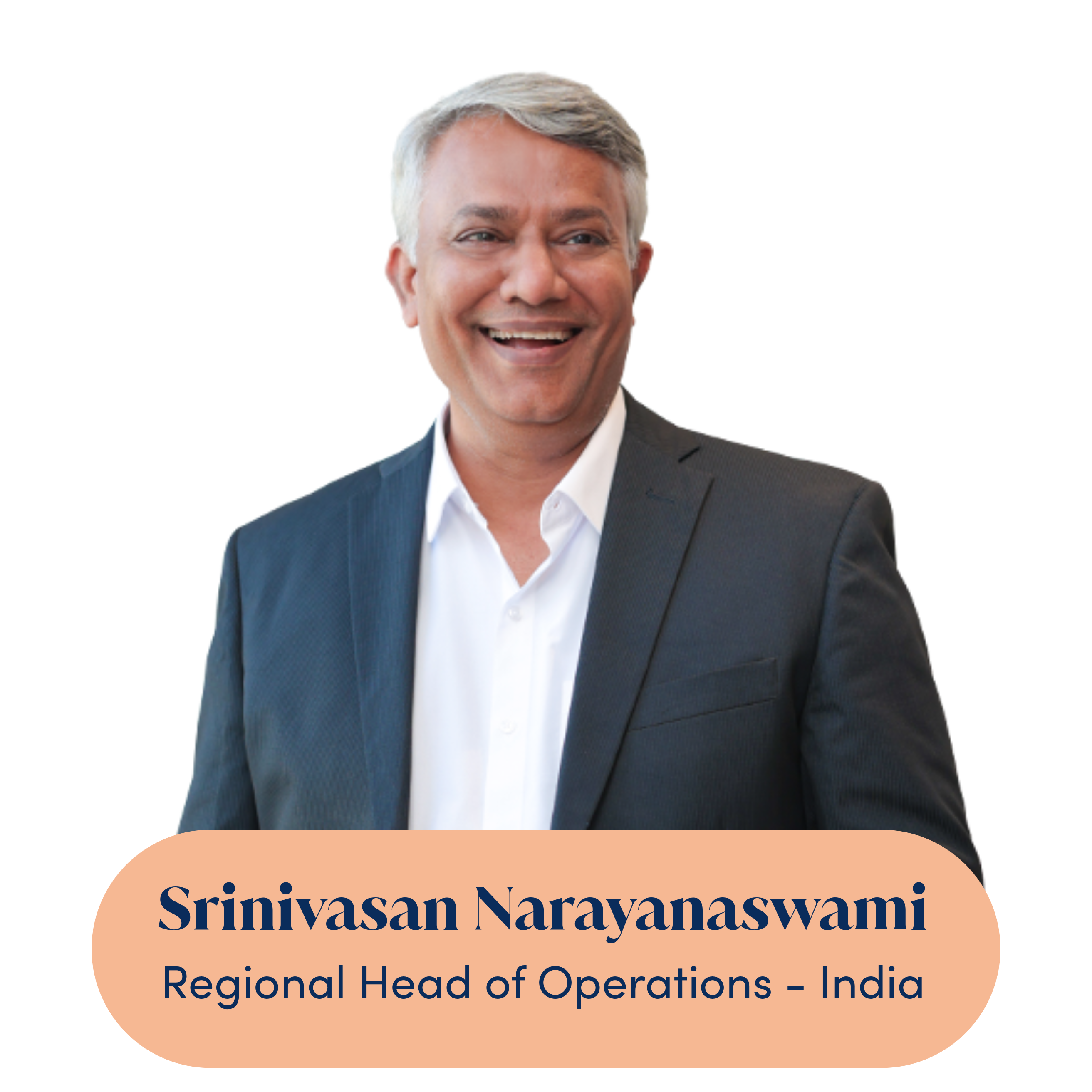
We spoke with Srini about his leadership philosophy, how he approaches compliance and governance in an evolving Indian landscape, and what global mobility leaders should be thinking about next.
‘Frontline’ listening that reduces risk and strengthens performance
Early in his career, Srini learned a defining leadership lesson: listening is just as important as directing. Working across complex, multi-city operations, he found that the most valuable insights often came from frontline teams and partners who engage with clients and guests every single day.
Solving compliance challenges without disrupting the business
In an industry shaped by regulation and risk, achieving a FIDI FAIM certification with zero non-conformities is a significant achievement. Srini was recognised as the industry-leading quality standard for international removals, the FAIM certification requires rigorous operational discipline across every aspect of the business.
For Srini, success came from embedding compliance into daily operations rather than treating it as an isolated audit exercise. His approach focused on regular internal reviews, clearly documented processes, and - most importantly - well-trained teams who understood their role in maintaining standards.
“One of the biggest compliance challenges today,” Srini explains, “is adapting quickly to changing regulations around data protection, vendor governance, and duty of care, while still maintaining business continuity.”
Legacy processes can often create vulnerabilities or inefficiencies. Srini’s solution was flexibility, redesigning workflows to tighten controls and improve transparency without disrupting clients or frontline teams.
“The key learning,” he says, “is that compliance must be built into everyday decision-making. When done well, it strengthens trust, resilience, and long-term performance rather than slowing the business down.”
Sustainability can become a leadership opportunity
For Srini, challenging periods often present opportunities for operational improvement. During COVID-driven IT relocations, sustainability became a key focus. He implemented consolidated shipments to reduce transport emissions, optimised routing to minimise handling and carbon impact, and encouraged the reuse of packing materials to cut waste.

Navigating India’s micro-markets to meet growing client expectations
India is uniquely positioned in global mobility, but success requires a deep understanding of its regional complexity. Unlike many Western markets, India operates as a network of micro-markets, each with distinct service expectations, supply maturity, and compliance requirements.
What works in Bengaluru may not apply in Pune or Gurgaon. As Srini explains, “The opportunity is large, but success depends on local supply depth, strong partner governance, and operational discipline. Effective mobility programmes adapt service delivery city by city.”

Leading teams through digital and operational change
Alongside service transformation, digital transformation is becoming central to global mobility. Integrating technology while managing legal, cultural, and operational challenges requires careful coordination.
Srini found that aligning expectations across time zones was critical. Clear communication reassured clients, kept teams engaged, and enabled more deliberate, patient execution across stakeholders.
Managing multiple teams across India brings its own challenges, but Srini’s leadership philosophy remains consistent: “Hire for attitude, train for skill, and give people ownership. Clear priorities, aligned metrics, and strong relationships are essential. I stay close to frontline teams because operational reality often surfaces there first.”
Today, India is simultaneously a sender, receiver, and delivery hub for global talent
In our expanding business and growing markets, we’re understanding and recognising the shifts in service, one of which being the rising preference for hybrid and remote working. Srini’s client-facing experience gives him an insider knowledge into changing demands, “Hybrid work has made mobility more flexible and agile. Assignments are shorter, start dates are less predictable, and employees often move for specific projects rather than long-term roles.” Srini explained that this has increased demand for serviced accommodation that offers flexibility in length of stay, quick confirmations, and the comfort to work from home when required.

Srini’s valuable local and industry-wide knowledge is a key asset in remaining at the forefront future mobility trends.
For more in-depth predictions for the coming year, head to our 2026 Predictions, or for a thorough analysis of our insights, read SilverDoor’s recent Market Update.