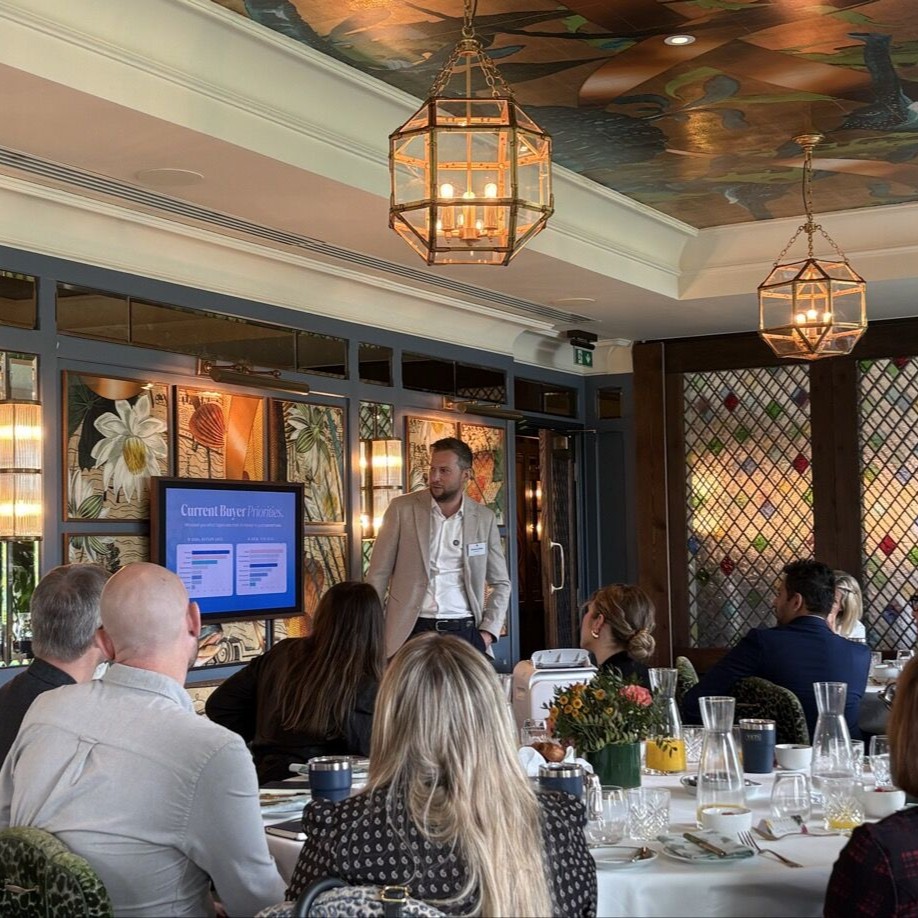
At the start of June, we brought together 20 corporate buyers for our second Industry Insights Breakfast, and the conversations did not disappoint.
The morning opened with CCO Claire Barrie unveiling findings from our May 2026 Market Update, giving the room an early look at the data shaping the serviced apartment market right now. London reservations up 26% year-on-year. India enquiries up 114%. VIP enquiries tracking 33% higher than this time last year.
Before the event, we surveyed attendees on the topics most relevant to their roles right now. In 2024, technology topped the priority list. In 2026, budgets have taken the top spot, with crisis management and traveller wellbeing close behind. Sustainability, which ranked third two years ago, has dropped to the bottom of the list, not because it no longer matters, but because the pressures of cost, risk, and workforce resilience are dominating the day-to-day. Those shifts shaped our three roundtable themes: budget pressure, technology integration, and traveller wellbeing, which were guided by COO Martin Klima. Raj Mann, Global Immigration Director at Fragomen, then took the floor to lead a session on navigating geopolitical uncertainty, covering how travel and mobility teams can build crisis response frameworks and workforce resilience in an unpredictable world.
Here are our top 6 takeaways:
1. Context is currency
Budget pressure is often manageable, as long as buyers can defend overspend to their finance or leadership teams with the insight into why. The roundtable was clear on this: suppliers who explain the reasoning behind price changes, not just the new number, give their clients something genuinely valuable. The ability to say why prices have changed or budgets aren’t being kept to is what shifts a challenging conversation into a productive one.
Suppliers who communicate proactively, before the quote or invoice lands, build the kind of trust that outlasts the transactional. In a market where buyers have more choice than ever, that transparency is increasingly what sets the best partners apart.
2. Value for money is about more than the nightly rate
Cost-per-night remains the most visible metric, but it's rarely the most meaningful one. Roundtable guests shared that they measure value across a much wider set of criteria: how quickly can a supplier resolve an issue; how well do they know niche or difficult markets; what is their buying power; and what does their safety and security record look like?
The hidden costs of a serviced apartment stay such as unforeseen extensions, last-minute changes, the downstream spend that follows a cancelled flight, are where programmes can lose money quietly. Suppliers who actively help clients manage and contain those costs will earn the kind of loyalty that a competitive nightly rate alone cannot.
3. Intern accommodation is a reputational investment, not just a cost line
How a business houses its interns says something about that business. Interns mix with peers from other firms; they talk and being seen to manage or house them poorly - in accommodation that priorities cost over wellbeing/satisfaction/community - reflects on an employer in ways that are increasingly hard to ignore in a competitive graduate market.
There’s a growing shift in mindset amongst forward-thinking organisations who see that positive intern programme experiences are part of their employer brand. Those making this change early will have an edge, particularly in sectors where the war for talent continues. Firms that don't will find themselves at a reputational disadvantage in a talent market where the student experience, including where they’re housed during an internship or graduate programme, is part of how employers are assessed and discussed.

4. Data depersonalises difficult conversations
When a senior stakeholder questions a decision, the conversation has a tendency to become personal. Strong data can stop that from happening. It provides a rationale that sits outside individual judgment and in doing so, shifts the discussion from "who made this call" to "what does the evidence say."
The table agreed that this is one of data's most underappreciated functions. It isn't just an input to strategy, it's a tool for managing the politics that surround strategy. For travel and mobility managers making the case for their programmes internally, that distinction matters.
5. Human interaction isn't going anywhere
There was clear consensus that VIP travellers and complex mobility cases will always require a human touch. Automation can handle volume and routine tasks however it struggles with nuance. The expectation of direct, personalised human support at the top end isn't going to erode and our Market Update data backs this up, with VIP enquiries running 33% higher than last year. The industry's challenge isn't whether to use AI but knowing where it adds value and where it needs to step aside.
6. Policy and wellbeing are not the same thing - and the gap between them is where programmes struggle
Policy is structured, measurable, and enforceable. Wellbeing is personal, variable, and difficult to standardise. The table identified the alignment of both as the central challenge for travel and mobility managers, and one that, in most organisations, still isn't receiving the dedicated attention it warrants.
The structural difference between mobility and travel programmes is relevant here. Mobility assignments typically include a consultation period that creates a natural space to understand the individual, their circumstances, preferences, and concerns. Self-serve travel booking doesn't replicate that, and the wellbeing gaps are more visible as a result. It isn't simply a gap in care, it's a gap built into the design of the programme.
Cost still wins when the two are in direct tension, the table was clear about that. But the fact that wellbeing is now consistently part of these conversations, at events like this and in programme design more broadly, suggests the balance is slowly shifting. The managers acting on it now will be well ahead of where the industry lands in two to three years.
Want more insights like these? Discover the latest Market Updates in our Resource Hub and stay informed on the trends influencing corporate travel and mobility.