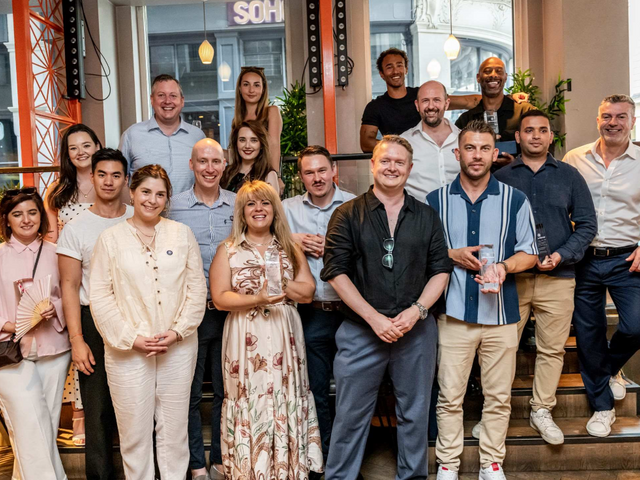
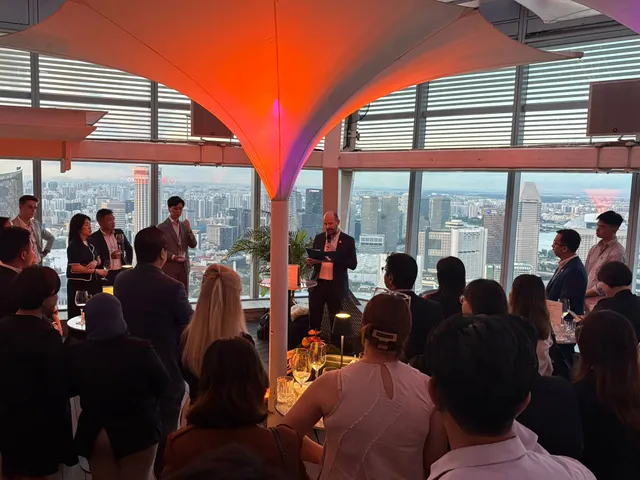
Over 200 industry professionals attended SilverDoor’s sixth annual Partner Engagement Day at our London headquarters.
This flagship event unites our global partner network and delivers insights from industry leaders, SilverDoor clients, and fellow property partners to explore trends and innovations shaping corporate housing and business travel. The sessions offered practical insights to optimise corporate housing programmes and enhance assignee experiences.
Kicking off the day, our CEO, Stuart Winstone, showcased our recent merger with Synergy Corporate Housing, a major step in simplifying partner relationships and enhancing the global service we provide.
Read on to find out what other insights were shared...
Panel: From the Buyer’s Perspective
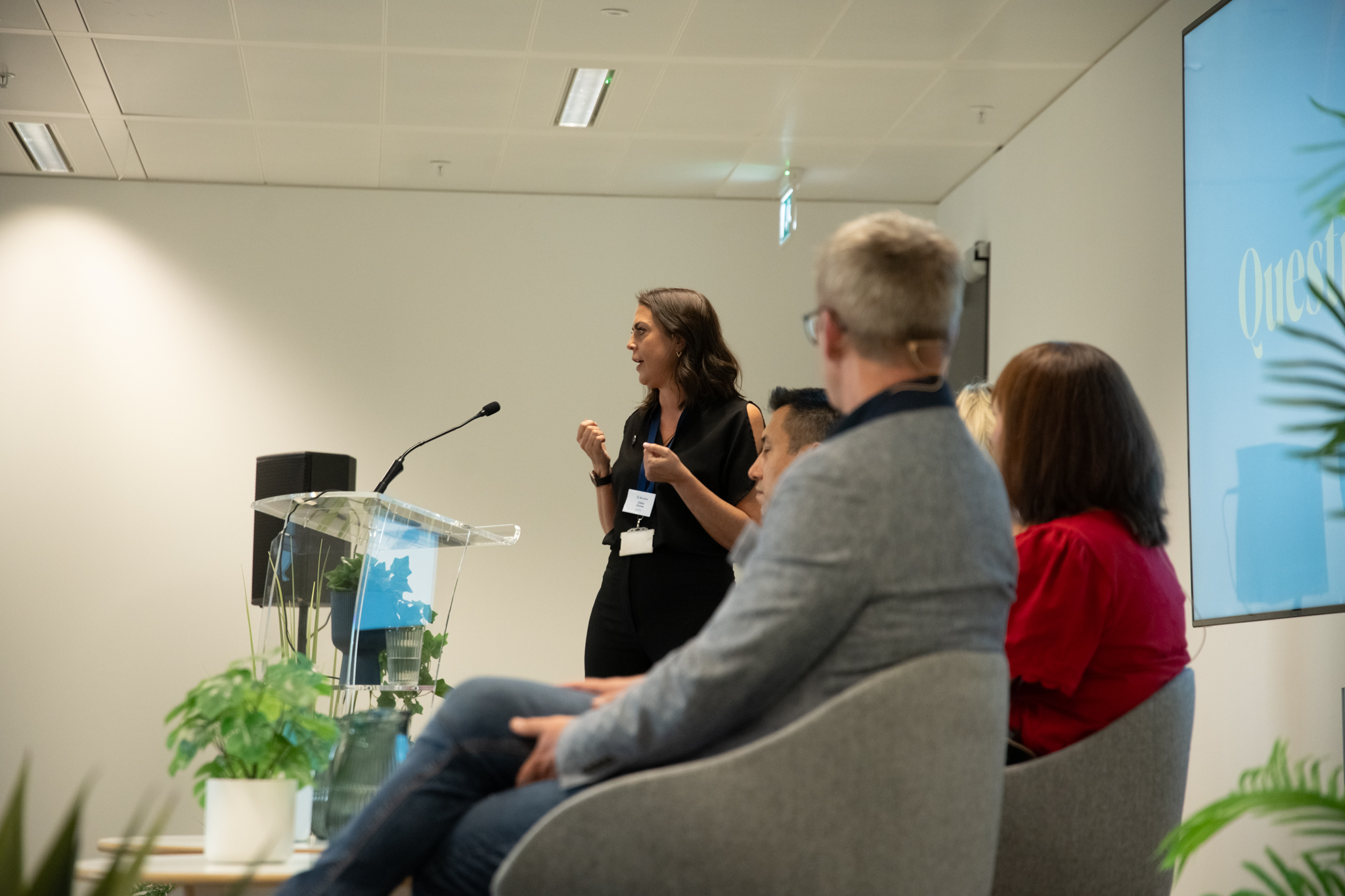
Moderator: Emma Horton, Senior Client Programme Manager, SilverDoor
Panellists: Kevin Carr (UBS), Natalie Lavergne (Graebel), Hannah Bozward (EY), James Diaz (Absolute Travel Management)
“Data drives decisions. The richer the data, the better our ability to make informed choices.” - Kevin Carr, UBS

UBS leverages analytics to monitor key travel metrics and trends, supporting informed decision-making across policy and reporting. Accurate and timely supplier data enable insights into booking behaviour, sustainability, and user feedback, all of which contribute to the ongoing enhancement of its travel programmes.
While managing multiple travel channels, the team is continuously working to simplify and unify the booking experience. The goal is to provide users with a seamless process that offers access to live inventory and instant booking and payment options - bringing the ease and convenience of personal travel into the business travel environment.
“Travellers don’t want to have to hunt someone down at 11 o’clock at night after they’ve flown with their family to get all of that information.” - Natalie Lavergne, Graebel

The panel explained that with their varied client base, there isn’t always a one-size-fits-all approach, particularly for smaller providers.
From a Relocation Management Company (RMC) perspective, Natalie explained technology integrations are a key focus, as clients increasingly expect a seamless arrival experience. The most common feedback from their clients is that employees don’t want to dig through emails or chase someone late at night for Wi-Fi codes or access details - they want that information instantly at their fingertips.
Whilst consultants currently bridge some of these gaps, there’s a growing demand for integration and automation to make the end-user journey smoother. Natalie noted that with advancements in AI, the industry is moving closer to delivering that streamlined experience, and there’s a worthwhile future in APIs. For companies with graduate schemes or internship secondments, this is a vital element to consider and proving to be useful.
“Data really helps because it allows you to measure everything and then take action.” - James Diaz, Absolute Travel Management
Many companies are still in the phase of gathering data, and early insights show that booking patterns are very different across organisations.
When companies can track all their spend, they’re better equipped to make smarter choices. While some organisations are already willing to invest a bit more for greener options, cost often remains the top priority. Still, with robust data, corporates and suppliers alike are finding ways to balance efficiency, cost, and sustainability more effectively.
Kevin from UBS also highlighted the increasing demand in the workplace for sustainable options. Ultimately, current booking behaviour is tending to prioritise business needs and cost. Whilst this is making long-term change difficult now, there is growing pressure on suppliers to ensure the most sustainable decisions are being made to ease this transition in a cost-effective way.
Fireside chat: Marketing Business Travel: Earning Trust and Providing Value in an Age of Uncertainty.
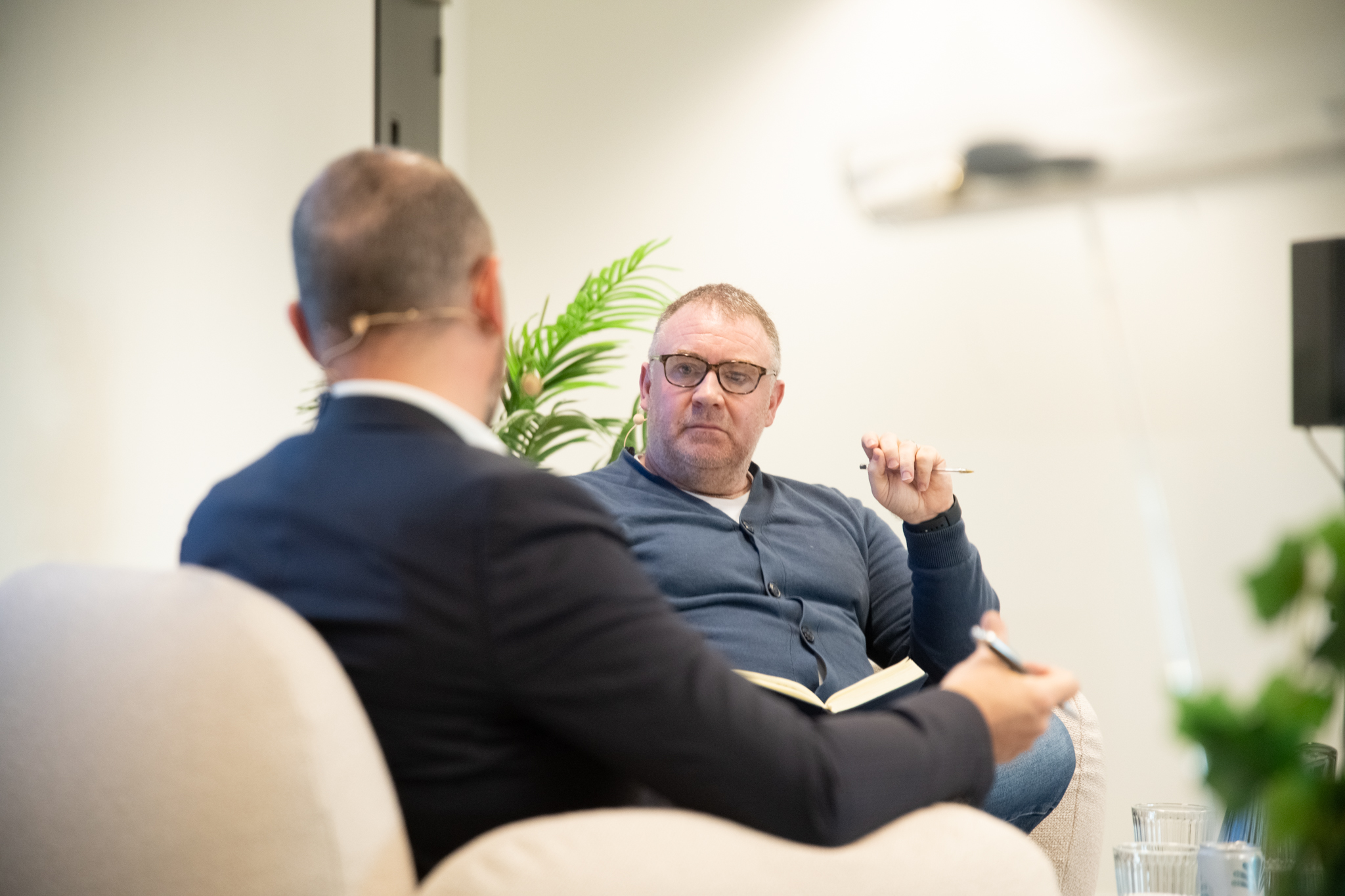
Panellist: Martin Ferguson, Managing Partner - Kintela Group
Martin Ferguson, a former journalist turned communications expert, shared valuable insights into the evolving business travel industry, emphasising how geopolitical uncertainty and economic pressures are reshaping the role of corporate travel managers.
“Travel planning is no longer about isolated “crisis plans” - uncertainty is now embedded in everyday operations.”

Over the past 25 years, business travel itself hasn’t changed dramatically, but the uncertainty surrounding it has. From 2000 to 2012, the world saw major periods of instability with events like 9/11, SARS, terrorism in Europe, the global financial crisis, and even the Icelandic ash cloud.
Since then, that uncertainty has only intensified, with Brexit, COVID-19, the war in Ukraine, tensions in the Middle East and between China and Taiwan, Trump-era trade tariffs, escalating cyber threats, and growing climate crises, all magnified by the influence of social media in a way that earlier decades never experienced.
The role of the Travel Manager has evolved alongside this change. Once a specialist focused on bookings and supplier relationships, the Travel Manager is now central to corporate operations, collaborating with procurement, finance, HR, IT, InfoSec, and sustainability teams. Modern Travel Managers must be adept in technology, AI, sustainability, and strategic business planning, while communications must be tailored to the priorities and concerns of the audience.
Despite the volatility, some factors remain non-negotiable: safety and location assurance are fundamental, and strong connections with TMCs, aggregators, and tech platforms are essential. Importantly, uncertainty also creates opportunities - for example, shifts in client operations due to tariffs or other market events allow suppliers to deepen relationships and provide strategic support.
Crises and periods of uncertainty are defining moments for reputations, particularly in corporate travel. During these times, companies value partners who are trusted, consistent, and reliable. Communications must focus on substance, relevance, and authenticity, avoiding tone-deaf, overly promotional, or luxury-focused messaging. Travel managers need visibility, data, and reporting, while travellers want to know that their needs and safety are being prioritised.
Accessibility is also critical, being easily contactable reinforces trust and confidence. The overarching principle is to be stable, consistent, and dependable, as these qualities define successful communications during uncertainty.
"It's not so much about what you say, it's about what you do."

Martin explains that trust is fragile. People no longer automatically believe what they are told, and this has profound implications for business and travel. Credibility is built through actions, consistency, and attention to detail, rather than slogans or grand statements. As illustrated in Ted Lasso with the “fixing the showers” analogy - small, meaningful gestures - like addressing a tangible problem, can earn lasting trust and demonstrate reliability. In corporate travel, this means that first impressions, responsiveness, and thoughtful service are critical for fostering confidence and long-term relationships.
Effective communications during periods of uncertainty require a tailored approach for different audiences. At the company level, messaging should emphasise reliability, safety standards, and business continuity to build trust with stakeholders. For Travel Managers, the focus is on providing accurate, actionable data and reports they can use to make decisions and communicate internally all other departments. For travellers, clarity and support are paramount: instructions should be simple, house rules clear, and teams easily contactable, demonstrating strong duty of care. By addressing the needs of each group, businesses can maintain confidence, trust, and operational efficiency even in uncertain times.
"You can see with conviction that travel powers progress - economic progress, societal progress, and human connection."

While the industry has often faced criticism for environmental impacts, travel drives GDP, business growth, and employment, while also fostering connections between communities and breaking down social barriers. The COVID-19 pandemic highlighted this in stark terms: when travel halted, economies struggled, unemployment rose, and mental health challenges increased. Although some business travel ROI can be measured in revenue growth, many benefits are intangible, motivating employees, improving staff retention, and enhancing workplace culture. These impacts demonstrate the critical value of travel, even when it cannot be fully quantified.
Keynote: Own Your Carrot
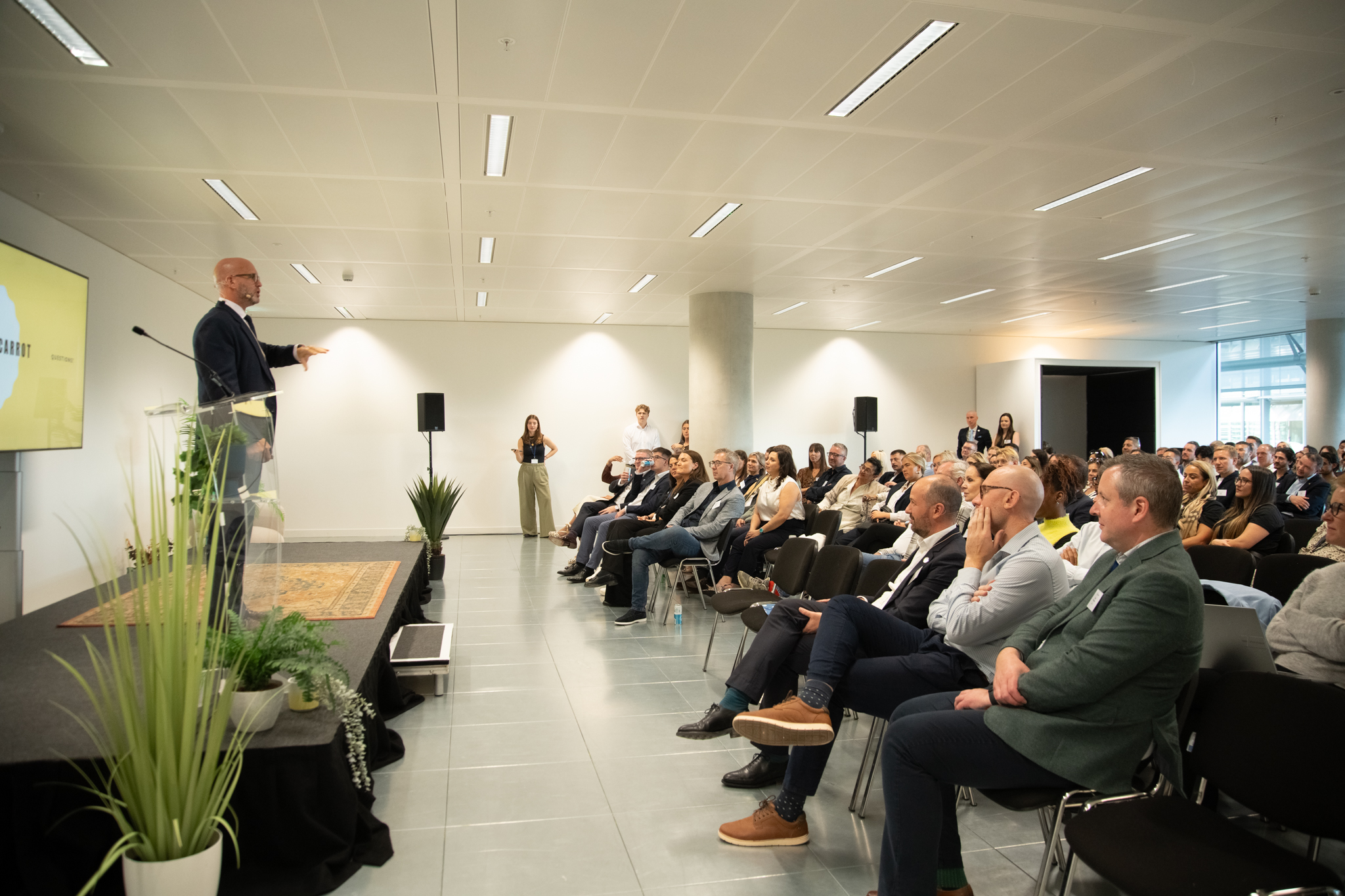
Panellist: Jonathan Acott, Head of Experience, Chiswick Business Park & motivational speaker
Jonathan Acott shared a deeply personal story of resilience, having battled six cancers, undergone multiple life-altering surgeries, and faced depression, PTSD, and infertility.
"It’s not the size of the problem; it’s how long you’re carrying it that makes it unbearable."

He explained how even small, everyday challenges can weigh more heavily than the “big” issues, because they serve as constant reminders of life’s fragility. He used the analogy of holding a can of drink: light at first, but after hours, the weight becomes intolerable. His key message was that comparison serves no purpose, “it’s not a competition” and everyone’s struggles are valid.
Motivation, he argued, comes and goes in waves, but discipline does not. With an average life expectancy of just 4,000 weeks, and many of us already well into that count, time is the most valuable commodity we have - one that cannot be bought or borrowed. He told the audience to treat life as a wave, not as a series of isolated moments, and decide how you want to use the weeks you have left with intention rather than drifting.
"No is a complete sentence."

He explained how saying “no” can transform both personal and professional life. He recalled refusing to cook turkey for Christmas, even with 16 guests expected, and instead choosing to serve beef Wellington. Only four people turned up - but Jonathon called it “the best decision of my life.” The point is that people often fall into people-pleasing or performative behaviours, even when it costs them money, energy, and joy. Learning to say no, politely, without excuses - is essential in life and in business culture.
"Be coffee - let yourself change the water around you, not let the water change you."

Using the “carrot story” as a metaphor, he explained that everyone has challenges or mistakes (big or small) that they might feel embarrassed by but owning them earns respect and liberates you. He tied this to daily life, work, and relationships, highlighting that even minor missteps, when acknowledged, build trust and prevent unnecessary conflict.
He referenced the Holocaust survivor analogy of carrots, eggs, and coffee beans: carrots in hot water soften, eggs harden, but coffee transforms the water around it. The key lesson is to face challenges by shaping your environment and influencing what you can, rather than letting external pressures break or harden you.
SilverDoor’s Partner Engagement Day 2025 highlighted the importance of seamless bookings, cost management, and sustainability, alongside trust, clear communication, and resilience.
By leveraging data, technology, and best practices, partners and travel managers can enhance assignee experiences, align traveller behaviour with company goals, and navigate an increasingly complex business travel landscape with confidence.