Staying in Taipei, Taiwan
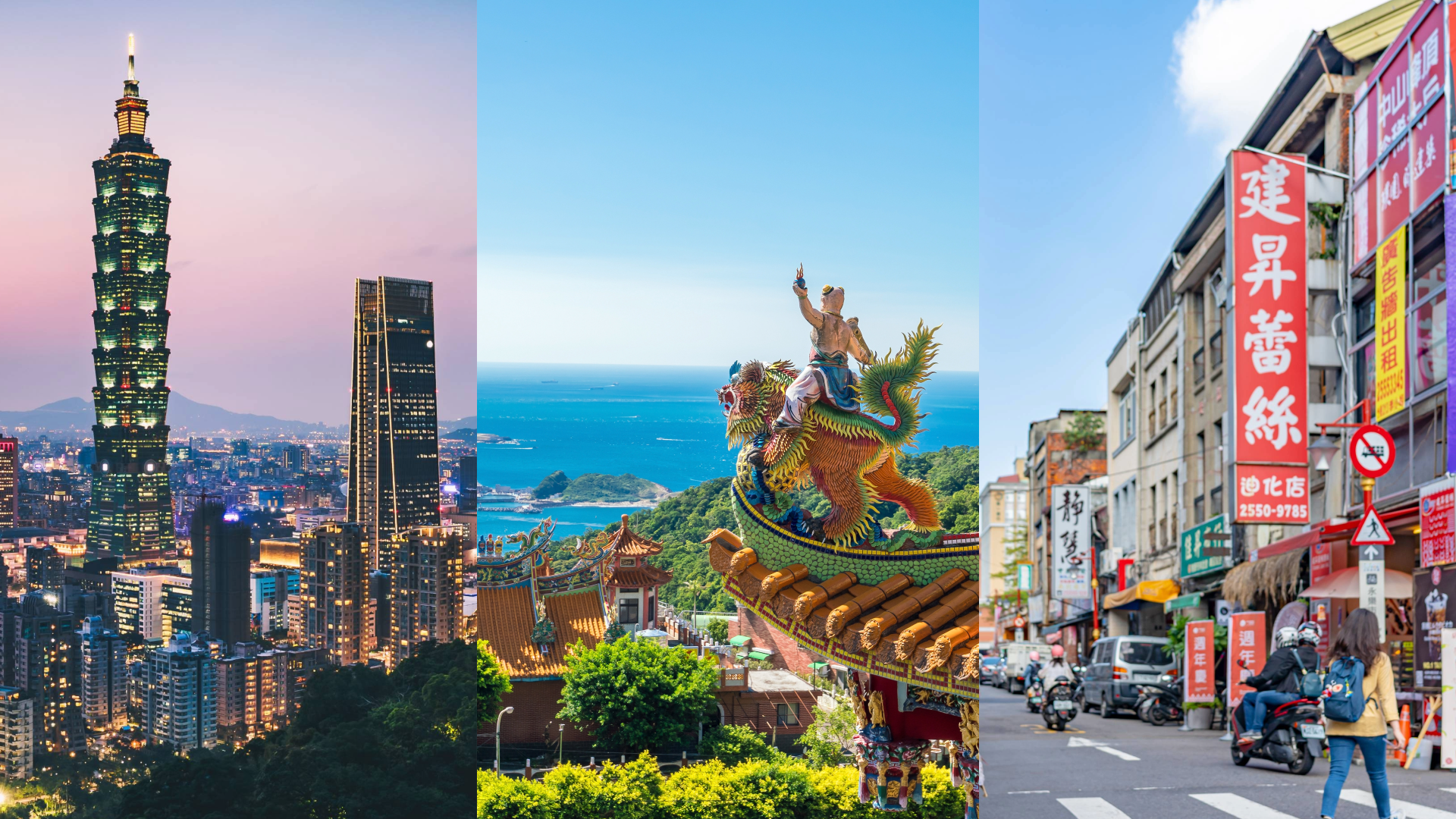
Pictured: The night skyline of Taipei, intricate religious temples and the busy shopping streets
Visiting Taipei, Taiwan - Key Information
Taipei is the capital city of Taiwan, as well as being the political, economic and cultural centre of the country. With business-friendly tax policies, a robust infrastructure, and strategic location, it’s an excellent place for corporate travel and networking opportunities with its highly skilled workforce.
Some of Taiwan’s renowned districts, such as Wanhua, Zhongzheng, Datong and Ximen make for great places for business travellers visiting Taipei to stay within commuting distance of the major business hub in the centre. Wanhua is known for its intricately carved temples and historical spiritual centres, while the neighbouring district Zhongzheng has many notable monuments and known cultural landmarks such as the Chiang Kai-shek Memorial Hall.
The vibrant Ximen is perfect for boutique shopping with independent and multi-storey mall options, like the well-loved Wannain Building. Datong is a more traditional area, and one of the oldest in the city being a strong core hub for religious activity and historical trading culture.
Taipei’s arcaded buildings and lake gardens have been well preserved and are a testament to the city’s rich heritage, while still being a forward-thinking, trendy city, a great balance for a cultural business travel trip.
Weather in Taipei

Taiwan's climate is subtropical, making it hot and humid in the summers, with cooler, windy winters. When staying in Taipei we’d recommend using high SPF for protection from the high UV rays, even when it’s overcast and to pack an umbrella when travelling at any time of year.
Currency in Taipei

The currency in Taipei is the New Taiwan Dollar (NT$). While credit cards are accepted at most shops and central city restaurants, it’s worthwhile to carry cash in more rural areas. On the whole, tipping is not expected. Restaurants usually include a service charge, but will accept any change with the bill.
Currency code - NT$
Health & Well-being in Taipei

The World Health Organisation recommends that travellers to Taiwan have Diptheria and Tetanus, Hepatitis A and B, MMR (Measles, Mumps and Rubella), Typhoid and Varicella (if you haven’t already had chicken pox).
Taipei’s famed hot springs are a great way to relax out of the office, or after a busy day. There are plenty of opportunities for massages to help you recharge too. The most popular hot springs at Beitou and Yangmingshan are heated by the geothermal activity of the Datun volcanoes.
In an evening after work, you can see Taipei’s atmospheric night time cityscape from the peak of the Elephant Mountain Trail, a popular sunset spot for locals to catch the glistening views. Another place we’d recommend taking time to appreciate and get some fresh air is at the breezy Yangmingshan National Park, which offers a cool break from the bustling city to see rich ecology and wildlife. Daan Park is another widely popular area for an evening picnic or a run.
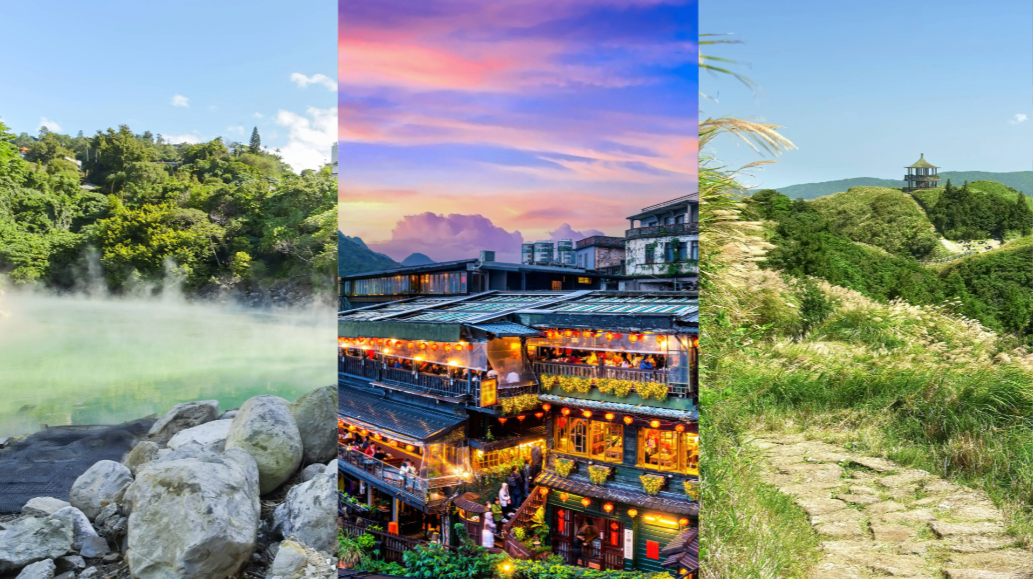
Pictured: The Beitou hot springs, sunset markets, and views at Yangmingshan park.
Data in Taipei

The government provides a free service iTaiwan, in thousands of locations across the country and especially in Taipei’s tourist and work spots. The metro system and post offices all provide free wi-fi in offices, at stations and on trains.
Plug Type: Type A & B
Emergency Contact Numbers in Taipei

Fire / Medical: 119 Police: 110
English-Speaking Police: (02) 2556-6007 (24 hours)
English Directory Assistance: 106
Cuisine in Taipei

Taipei has famous night markets boasting some of the best street food in the world. From simple staples such as braised pork with rice and steamed dumplings to peppered meat buns and grilled king oyster mushrooms. The Shilin Night Market is Taipei’s largest, and typically very busy with lines of stalls, and even an underground food court. Taipei also features Michelin-rated restaurants closer to the centre, still holding onto a sense of traditional Taiwanese cuisine.
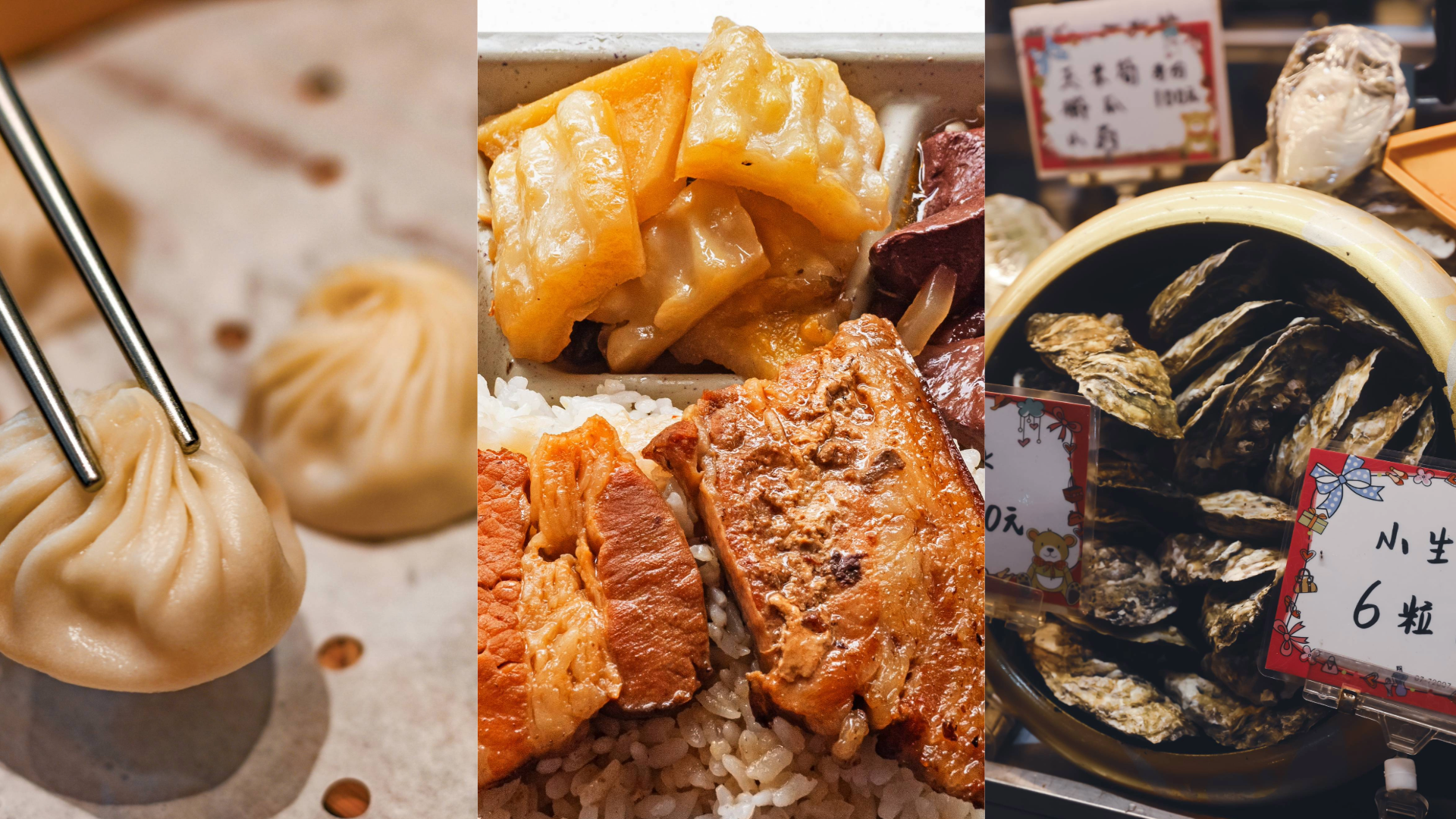
Pictured: Delicious steamed dumplings, pork, and market seafood.
Speaking the Language in Taipei, Taiwan

Mandarin Chinese is the official and most spoken language in Taiwan. Hokkien and English are both common, and used in everyday life, but business and law is conducted in Mandarin.
Some key phrases include:
你好 - nǐ hǎo – “hello"
再见 – zàijiàn - "goodbye,"
谢谢 – xièxie - "thank you"
请 - qǐng - "please"
你会说英语吗?- nǐ huì shuō yīngyǔ ma? - "Do you speak English?"
Transport in Taipei - Getting Around Taipei, Taiwan

The public transport in Taipei is affordable, clean, and convenient. Most importantly for business travellers in Taipei who are commuting, it is also very punctual. Getting an EasyCard cuts regular ticket prices for bus and metro services, and the card can be topped up in any metro station. The metro has accessible routes and elevators in all stations and excellent facilities for people with disabilities across the Taipei Metro map. A point to note is that drinking, eating, and chewing gum are all banned on the Taipei metro.
Most of the central bus stops have screens which list the timings of upcoming buses in both English and Mandarin. When taking the bus in Taipei, you can simply swipe your EasyCard once upon boarding and again once you’re getting off.
Hopping on a YouBike is a cheap and fun way to explore the city, and a good option for commuting during typical hours when the metro and buses are busier. The city has well-structured cycle paths both on and off the road with cycle docking stations near the metro stations.
City Map
At SilverDoor, we specialise in providing premium serviced apartments in Taipei tailored for business travellers. Our expert team ensures each stay is seamless, comfortable, and strategically located for your corporate travel needs. Browse our range of corporate housing in Taipei here, or contact us to discuss your requirements.