Last week, I attended ITM's annual event in Dublin - a valuable gathering on the business travel calendar. Across two sessions packed with data, panel discussions, and genuine industry debate, a clear picture emerged: the business travel sector is navigating significant change with a striking combination of realism and optimism.
Below are the six themes that stayed with me most, drawn from ITM's Buyer & Supplier Priority Survey and the panel conversation that followed.
1. Content Remains the Number One Priority - and It's Getting Worse
Year after year, content access tops the list of buyer priorities.
But the more striking finding from ITM's research this year is directional: buyer satisfaction with content access has been deteriorating, not improving, over the last three years.
When buyers are asked whether they have access to the content they need, the answer is trending in the wrong direction. For TMCs and suppliers, this is the defining competitive differentiator of the moment.

If you are not actively addressing this, you are falling behind.
Content was also cited as the lead KPI buyers use to evaluate TMC performance - ahead of cost, technology, and everything else. The message is unambiguous: close the content gap, or risk losing relevance.
For accommodation specifically, this means ensuring that the full range of options - including serviced apartments, which remain chronically underrepresented in many OBT environments - is visible and bookable within managed programmes. At SilverDoor, this is something we work on directly with our TMC and buyer partners every day.
2. There Is a Clear Gap Between What Buyers and Suppliers Think Matters
One of the more nuanced findings from ITM's data this year is the misalignment between buyers' and suppliers' perceptions of priorities. Suppliers tend to overestimate the importance of budget control to buyers and underestimate the importance of content access.
These gaps are not enormous - but they are meaningful. They suggest that in account conversations, both sides may be having slightly different discussions without realising it. Suppliers who take these data points into their next buyer meeting and use them to open a direct conversation about alignment will be better positioned than those who don't.
A related finding: 69% of suppliers believe that travel managers don't fully understand their sector.
That perception, if accurate, creates a real opportunity for both sides to invest in deeper mutual education.

3. Justifying the Travel Programme Is Now a Critical Skill
Perhaps the most striking theme to emerge from both sessions was the pressure buyers are under to demonstrate the value of the managed travel programme to internal stakeholders. This is no longer a peripheral challenge - it sits firmly in the top tier of buyer concerns for 2026.
ITM CEO Scott Davies made clear that this is a concern serious enough to have shaped ITM's entire programme for the year ahead, with a dedicated content stream -the Platinum Pathway - designed to help buyers and suppliers build the case together using tangible, measurable data.
For suppliers, this is a direct call to action. If you can help your buyer customers articulate the value of their programme internally - with clear KPIs, aligned data, and a compelling narrative, you will be seen as a genuine partner rather than simply a vendor. That distinction matters enormously when contract review time comes around.
4. Challenging Conversations Are Not Happening Enough
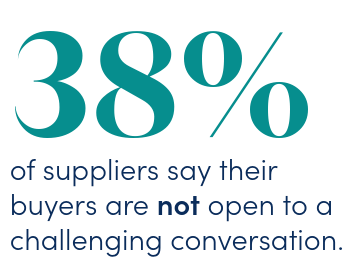
Only 62% of suppliers believe their buyer customers are open to a challenging conversation. That means more than a third feel their buyers are not ready for honest, constructive dialogue. And from the buyer side, only around half say they are actively having challenging conversations with suppliers.
Both figures are low. The business travel relationships that generate the most value for both parties are built on trust, transparency, and the willingness to say the difficult thing. Too many review meetings, the data suggests, are still characterised by feature and benefit updates rather than forward-looking strategic conversation.
At ITM Dublin, the panel was clear: comfortable, transactional interactions may feel easier in the short term, but they do not drive progress. The industry needs more honesty, not less.
5. Sustainability Has Been Embedded, Not Abandoned
Sustainability has dropped significantly in the buyer priority rankings - from near the top of the list 18 months ago to much further down in 2026. On the surface, this might look like the industry has moved on. The reality is more encouraging.
What buyers are telling ITM is that sustainable practices are no longer treated as a standalone workstream; they are being embedded into business as usual. Rather than sustainability sitting separately, it now runs through everyday decisions, approvals, and supplier conversations.
Emma Healy, Group Travel Manager at Jones Engineering, reflected this on the panel: the drop in visibility does not reflect a reduction in commitment, but a maturation in how that commitment is expressed. For suppliers, this means that surface-level sustainability credentials matter less than demonstrating how you help buyers make sustainable choices as part of normal programme management.
6. The Industry Remains Confident and Optimistic
Given the pressures the industry is currently navigating - economic uncertainty, AI disruption, offshoring, consolidation - the confidence levels reported by ITM are genuinely striking.
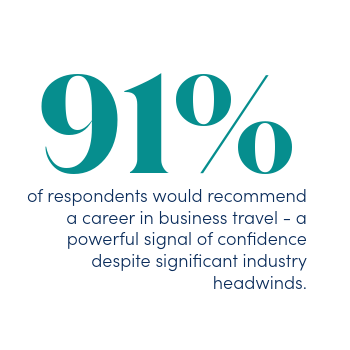
81% of buyers and 84% of suppliers feel secure in their roles. And 91% of respondents said they would recommend a career in business travel.
That last figure is worth sitting with. This is an industry that has faced a global pandemic, significant structural disruption, and growing questions about the future of work and travel - and the vast majority of the people in it still believe in it, and would tell others to join. That is not complacency. That is a genuine foundation of confidence to build from.
Final Thought
ITM Dublin was a reminder of why these in-person gatherings matter. The data is important - but it is the conversation around the data, the challenge, the candour, and the shared commitment to improvement, that makes the difference.
The themes above are not abstract observations. They are live challenges and live opportunities for every account manager, travel buyer, and supplier in the room. I left Dublin with a clearer sense of where the conversations we need to be having most urgently — and a renewed belief that this industry has the expertise and the will to have them. At SilverDoor, these themes sit at the heart of how we think about our partnerships: better content, more honest conversations, and a genuine commitment to helping buyers demonstrate the value of their programmes.