The FIFA World Cup is one of the world’s most major sporting events, with this year’s US, Mexico and Canada based tournament comprising of upwards of 100+ matches across 16 host cities. As we prepare for June’s fast approaching kick off, projections suggest the number of foreign visitors will top 3.5 to 6 million, leading to a shortage of serviced accommodation supply as business and tourism related demand reshapes the market for weeks at a time.
For global mobility teams, travel managers, and HR leaders overseeing project-based programmes, the World Cup will present a number of challenges including accommodation availability compression, demand related price hikes and fluctuating minimum stay requirements, resulting in impacted traditional booking flows.
Below, our experts have outlined what clients should expect, when they should be booking, and how to mitigate risk during this period.
FIFA World Cup Accommodation Overview
This year’s FIFA World Cup will run between June 11th and July 19th, however demand forecasts anticipate the impact window will last much longer due to the influx of tourism and FIFA related projects.
Here’s an overview of what to expect:
The United States
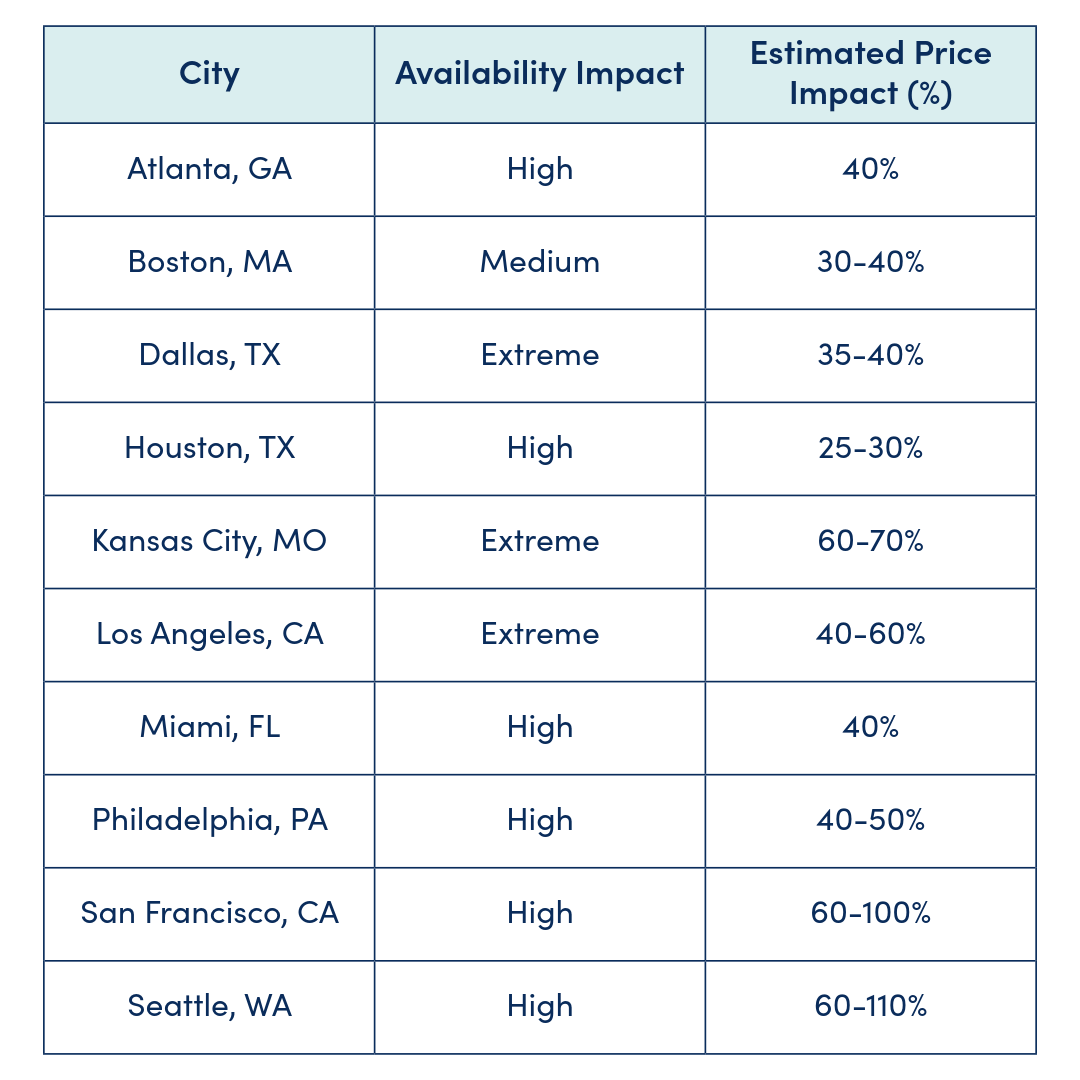
Impact cities: North America will host the majority of the World Cup matches across 11 cities including Los Angeles, Miami, Atlanta, Seattle, Houston, Philadelphia, Kansas City, Boston/Foxborough, Dallas/Arlington, San Francisco Bay Area and New York/New Jersey.
What to expect: significant demand and price hikes particularly in Dallas, Atlanta, Los Angeles and New York, which will host the majority of matches.
What you need to know:

Mexico and Canada
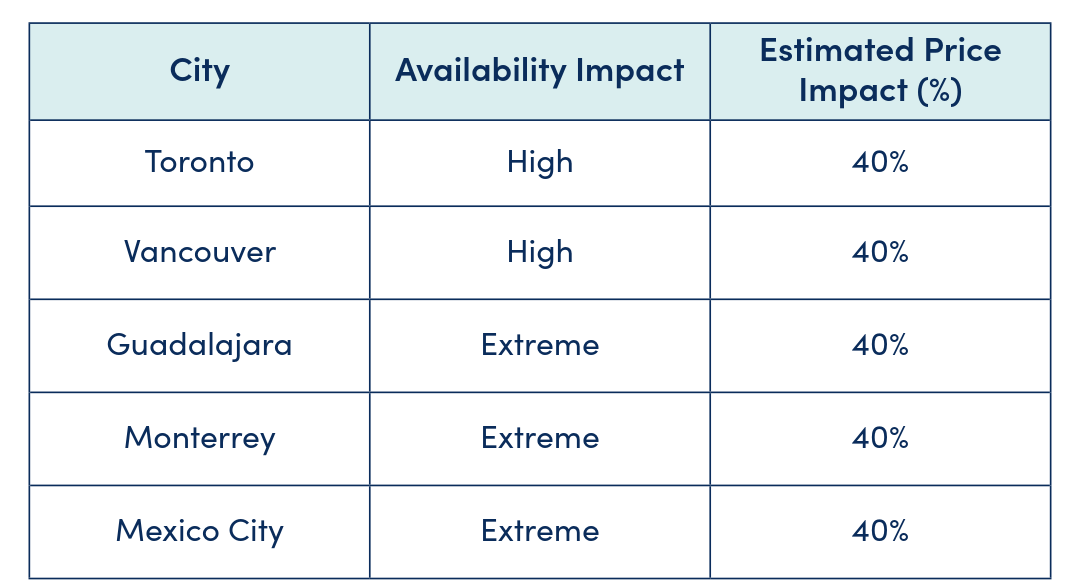
Impact cities: Mexico and Canada will play host across 3 and 2 cities, respectively. Cities include Mexico City, Guadalajara, Monterrey, Toronto and Vancouver.
What to expect: significant demand hikes in Mexico City, Toronto and Vancouver, particularly early in the tournament, during group stages which run between June 11th and June 27th.
What you need to know:
It helps to frame rate impact in three phases: pre-event ramp-up, tournament peak, and post-event normalization. Because the 2026 FIFA World Cup runs through June 11 – July 19, 2026 across North America, with most matches hosted in the United States, accommodation demand will build well before kick-off and taper gradually after the final.
Early demand ramp-up will be 6 months before the event as demand from sponsors, broadcasters, national teams and tour operators accelerates. From now until end of July you will see the largest rate increases now that the schedules and team placements have been finalised and fans have started entering the matrix.
Bear in mind prices can fluctuate heavily between match days and non-match days within the same city. The post tournament normalisation state will be between end of July and end of August. We expect prices to remain elevated 1–2 weeks after the final due to of delayed departures, fan tourism extending trips and operational teams remaining to close up.
Booking Accommodation During FIFA 2026
When should travel and mobility managers book accommodation?
The impact of the FIFA World Cup is already significant, and we advise travel and mobility managers to secure accommodation as soon as possible. A great place to start is to assess how many employees are travelling during tournament windows, identify any requirements to stay in host cities or feeder markets, and how long they need accommodation for.

How will accommodation pricing be affected by the FIFA World Cup?
World Cup pricing sits well outside standard market fluctuations. Even traditionally cost-effective areas experience sharp increases as demand ripples outward from host cities.
Currently, SilverDoor is seeing price impacts of 40%-110% across host cities. Clients are encouraged to book ASAP to avoid further rate increases.
Will there be any additional restrictions?
When booking, bookers should expect to encounter a minimum stay requirement of 30 days alongside limited flexibility in date changes or cancellations.Be sure to do your due diligence around visa requirements to allow sufficient time for applications and processing during this period of increased demand. This will ensure travellers aren’t caught short on arrival.
Clients should expect to widen their acceptable radius to allow for more flexibility.
When to consider secondary cities
Staying in surrounding areas is a great option if demand is saturated in the host cities. Despite this, it’s important to be aware that demand remand rarely stays confident to official host cities and surrounding locations often experience significant demand hikes too.
Viable alternatives may include:
- Secondary commuter cities within 60–90 minutes
- Business-focused districts outside city centres
- Tier 2 cities with reliable rail or road infrastructure
We are currently seeing healthy availability across the following Tier 2 alternatives:
New York / New Jersey:
- Stamford, Connecticut –50 min via Metro-North
- White Plains, New York – 45 min
- Newark, New Jersey – 20 min
- Jersey City, New Jersey – 25 min
- Princeton, New Jersey – 1 hr
Boston (Foxborough)
- Providence, Rhode Island – 45 min
- Worcester, Massachusetts – 55 min
- Framingham, Massachusetts – 35 min
- Lowell, Massachusetts – 50 min
Philadelphia
- Wilmington, Delaware – 35 min
- Cherry Hill, New Jersey – 20 min
- King of Prussia, Pennsylvania – 35 min
- Allentown, Pennsylvania – 1 hr
Miami
- Fort Lauderdale – 30 min
- Hollywood, Florida – 20 min
- Boca Raton – 50 min
- Delray Beach – 55 min
Los Angeles
- Long Beach – 25 min
- Pasadena – 40 min
- Irvine – 45–60 min
- Ontario, California – 50 min
San Francisco Bay Area
- Oakland – 50 min
- Fremont – 30 min
- San Mateo – 45 min
- Livermore – 55 min
Dallas
- Fort Worth – 30 min
- Plano – 35 min
- McKinney – 50 min
- Denton – 45 min
Seattle
- Tacoma – 40 min
- Everett – 35 min
- Bellevue – 20 min
- Olympia – 60 min
Speak to a member of the team today, who can support you in identifying 2nd tier alternatives.
Booking Accommodation Ahead of the FIFA World Cup: 5 Ways to Mitigate Risk in the Next 30 Days
1. Conduct an immediate traveller impact audit
Given accommodation availability is limited and prices are increasing fast, identify who is travelling between key impact periods across the impact cities listed above. Consider which employees may be impacted, their duration of stay and whether they can stay in secondary cities.
2. Book ASAP
With rates significantly inflated, aim to book your accommodation as soon as physically possible. A book first, refine later strategy is often safest during mega events.
3. Consider other impact events
With the FIFA World Cup taking centre stage, it can be easy to forget additional impact events which could add additional pressures to availability challenges. In the US, for example, The 4th July falls in the middle of the world cup, causing potential additional availability and pricing impacts.
4. Be prepared to be flexible
With just a few months until the World Cup, our experts recommend bookers remain open minded and flexible in their approach to booking. Serviced accommodation options are incredibly limited, and some first-choice options may not be available.
5. Reassess location strategy and expand geographic radius
Collaborate with your accommodation provider to identify areas with acceptable commute times in areas where availability impact is extreme.
6. Set stakeholder expectations
The World Cup will create non-standard accommodation market conditions, meaning traditional travel policies may not apply. Communicate early with travellers, finance teams and leadership teams to prevent later-stage escalations and bottlenecks.
The Window is Narrow but Not Closed
The FIFA World Cup will create one of the most compressed accommodation North America has seen for a very long time. Despite limited availability and significant price increases, opportunities still exist for organisations who are flexible and willing to book at pace.
For travel and mobility managers, the next few weeks are critical and with the right strategy, flexibility and support from an experienced accommodation provider, it is still possible to secure suitable housing solutions.
Speak with a member of our team today to assess your requirements, identify viable locations and secure accommodation before availability closes further.