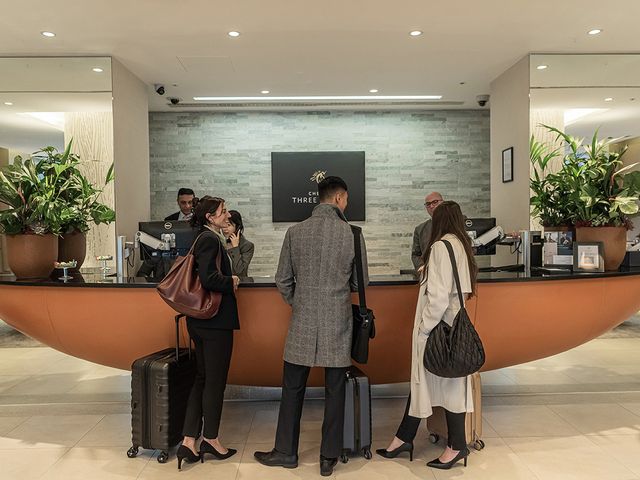
The Forum for Expatriate Management (FEM) Europe, Middle East, and Africa (EMEA) Summit once again brought together global mobility leaders, thinkers and practitioners to discuss workforce strategy, immigration, and talent movement.
Over two days of thought-provoking panels, I had the privilege of joining peers from across the industry to explore the themes shaping our sector from geopolitical volatility and crisis management to sustainability, data, and the human side of relocation.
For me, the event reaffirmed that global mobility is no clearly longer a 'back of house' support function. It’s a strategic enabler, one that touches every part of a business, from talent attraction to cost management, employee experience, and resilience planning.
Below are my reflections from the Summit's discussions:
“Global Mobility is a very particular function… we can read laws, work with data, and work with people.”
– Zuzana Jasenovcova, Senior Manager Global Mobility, Siemens Healthineers
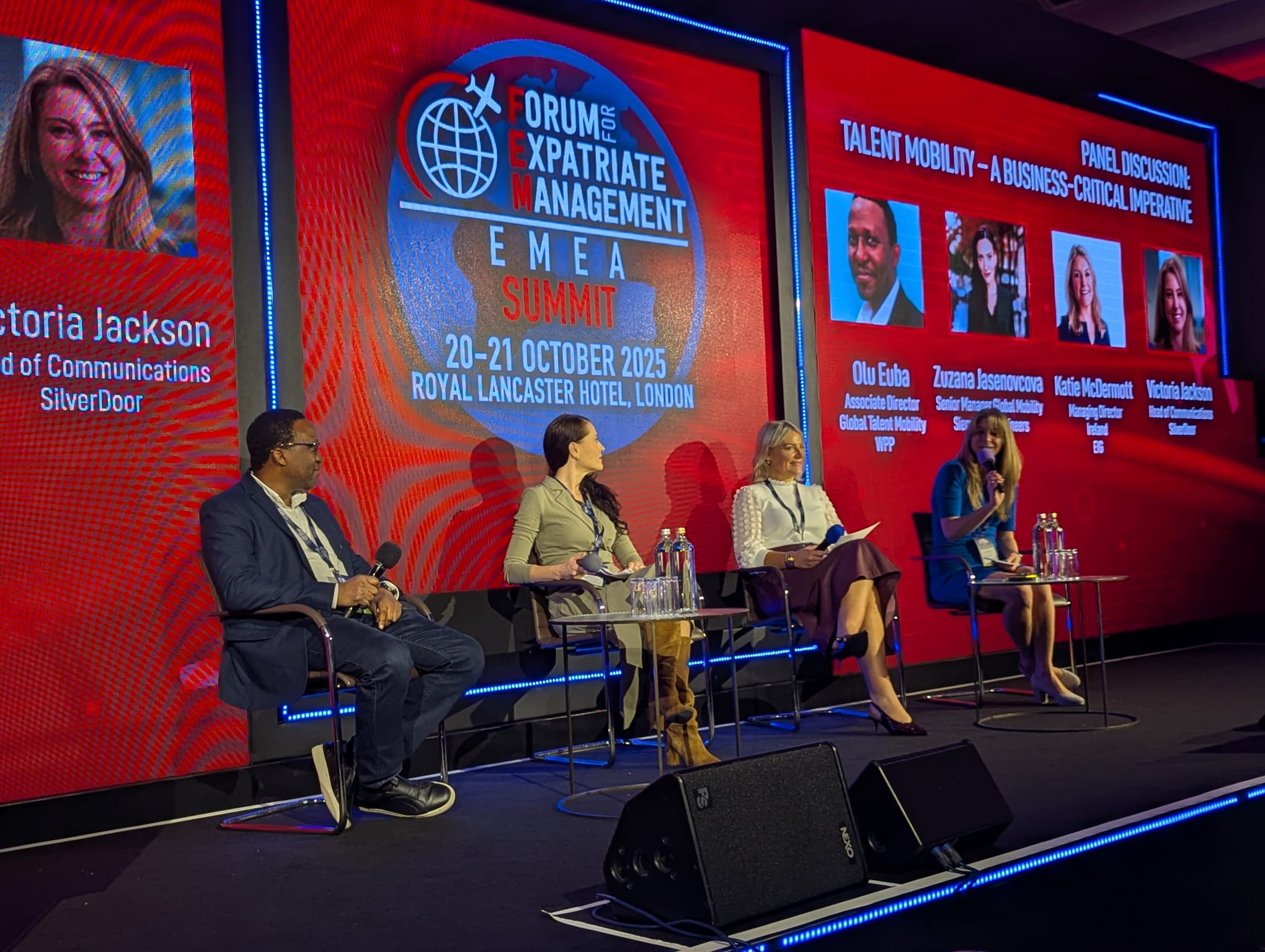
I was honoured to join the panel on Talent Mobility – A Business-Critical Imperative alongside Zuzana Jasenovcova (Siemens Healthineers), Katie McDermott (EIG), and Olu Euba (WPP).
Zuzana spoke about the evolution of global mobility from what she called “moving boxes”, a logistical exercise, to a strategic partner with the business. She explained that mobility professionals, now sit at the intersection of compliance, data and people. They read laws, interpret data, and support individuals and that combination of skills is incredibly rare.
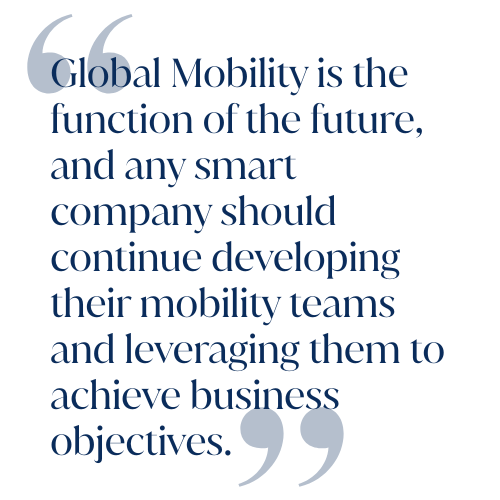
As Zuzana put it, “Global Mobility is the function of the future, and any smart company should continue developing their mobility teams and leveraging them to achieve business objectives.”
For my part, I shared how SilverDoor is helping clients look at governance and cost control in tandem with employee experience and talent development. There’s definitely both appetite and opportunity for cost control, but this doesn't have to come at the cost of a great experience; the data and booking volumes we handle, it’s straightforward for us to run scenarios and show what those tweaks to your programme can look like in practice in terms of value and efficiencies.
We’re seeing clients explore co-living, room sharing, and policy refinements, practical shifts that can yield real savings without compromising the employee experience. Our booking data highlighted that for the first time in years, New York has dropped out of our top five most-booked destinations, replaced by Dubai, as companies seek value in high-quality but more affordable alternatives.
That same data points to growth in Seattle, Dallas, and Houston, and across APAC in markets like Taiwan and Malaysia. It’s a fascinating reflection of how flexible mobility policies are adapting to the need for business agility.
The conversation also touched on softer (but equally important) challenges. Katie McDermott noted that one of the main reasons relocations fail isn’t compensation or logistics, but cultural integration. Especially in regions such as the Middle East, where over 90% of the private sector workforce is expatriate, understanding cultural nuance is essential to success.

“Global mobility is definitely, and should be, a lever to enhance talent.”
– Natalie Thompson, Director – Workforce Transformation, Vialto Partners
In Mobility Matters: Insights From Over 200 of the World’s Leading Mobility Programmes, Vialto Partners shared the results of a global survey that revealed only 23% of organisations' mobility functions currently operate at a truly strategic level.
Caroline McCormick (Director, Workforce Transformation & Managed Services) explained that the most advanced teams are those using data, AI, and internal collaboration to influence wider workforce and talent strategies. Natalie Thompson built on this, describing how one client established a governance board bringing mobility, HR and talent leaders together to assess how mobility supports leadership development and progression.
This alignment has allowed that same company to use workforce data, from skills gaps to diversity metrics to inform location decisions and office expansion. It’s a great example of how mobility can sit at the very heart of talent strategy.
The panel also touched on compliance, with Scherezade Maestre (Director Business Travel, Global Immigration and Posted Workers) warning that enforcement is increasing globally. Many companies still lack visibility over short-term business travel, creating risk exposure. Her message was that communication, shared data, and automation are key to managing compliance efficiently.
As Scherezade put it, “Automation and AI can assist in complex manual tasks like immigration tracking, policy alignment and risk thresholds.”
“Crisis management is no longer a reactive afterthought – it’s central to a resilient global mobility programme.”
– Raj Mann, Director, Fragomen
Expert Insight: Geopolitical Trade Shifts & Workforce Strategy Impacts, explored how mobility teams can navigate today’s complex, interconnected world.
Raj, who has spent over a decade advising companies on evacuation and crisis planning, explained that in recent years, the nature and frequency of global disruptions, from trade wars to regional conflict have forced mobility to evolve.
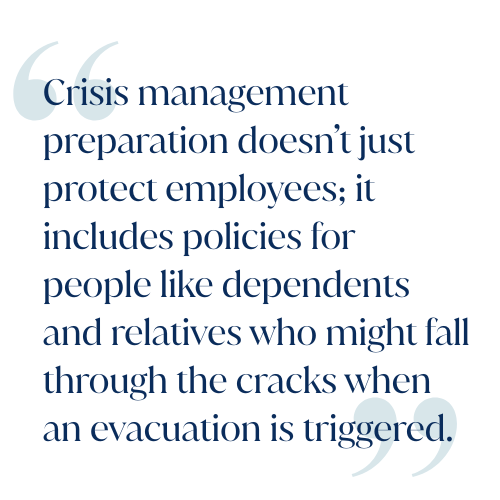
Preparation, she said, starts long before disruption strikes. “Any decision that you can make ahead of time, before a crisis hits, ought to be done in this prepare stage,” she advised. This includes not only policies around employees, but also dependents, visiting relatives, and even domestic staff - people who may not be considered immediately when an evacuation is triggered.
One example she shared was that a client headquartered in Amsterdam and London, operating in several high-risk locations, established pre-agreed arrangements with Heathrow and Schiphol airports. In an emergency, staff can be evacuated airside to secure zones regardless of visa status, before redeployment and continuity plans are finalised.
Raj summed up the mindset: “A big part of what we do in crisis management is about controlling the controllables.”
Trade and policy volatility were another area of focus. When new U.S. tariffs were introduced earlier this year, a major technology company working with Fragomen suddenly found its China operations in jeopardy. The business began exploring alternative locations in Vietnam, India and Indonesia, requiring in-depth assessments not just of immigration frameworks but also political stability, economic resilience, and labour market data.
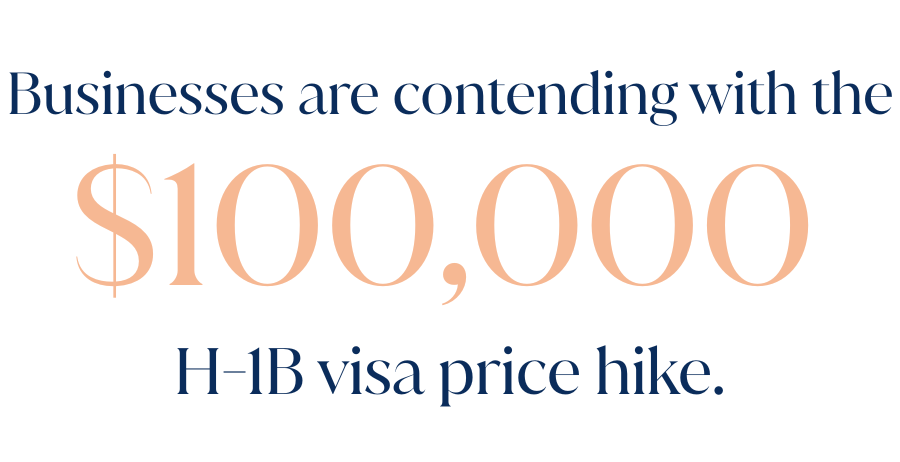
Harry Goldstraw (Manager, Business Development and Mobility Projects) built on that point, suggesting that recent U.S. visa changes - including the H-1B fee rise to $100,000, present an opportunity for businesses to review their structures. “These changes can be a lever for you to have an in-depth look at your mobility framework,” he said. He explained the importance of auditing your population and knowing exactly who you have, from skillset to nationality and progression, this informs your ability to make strategic decisions.
“Companies can create jobs, but politics can certainly create the right conditions for companies.”
– Anders Hall, State Secretary to the Minister for Migration, Sweden
The Opening Keynote Discussion focused on the role of government in shaping future mobility flows across EMEA. Anders Hall highlighted how many European countries, including Sweden, are actively reforming their systems to attract skilled professionals displaced by tightening U.S. and U.K. immigration laws.
Sweden’s Migration Board, for example, has introduced a new model that cuts work permit processing times from 100 days to fewer than 20, an impressive leap forward that demonstrates what collaboration between policymakers and business can achieve.
The panel also discussed how digital passports and biometric systems will soon standardise travel across Europe, making cross-border assignments faster and less bureaucratic.
These reforms point to a clear trend that Europe’s mobility landscape is opening up, not closing down and companies that understand and anticipate these changes can position themselves advantageously in attracting and retaining global talent.
“Moving forward in the next five to ten years, what do we need in the team? We need data analysts.”
– Shelley Crofts, Head of Global and Domestic Mobility Services, BAE Systems
Adjusting to a New World Order – Can Mobility Lead the Way? explored how technology, data and new skillsets are reshaping mobility functions.
Shelley Crofts from BAE Systems explained that in the next five to ten years, data analysts will be essential members of every mobility team. As data capture improves and tools evolve, mobility professionals need to translate numbers into insights from forecasting policy impact to measuring programme effectiveness.
Charlotte Dodd from Sky shared how her organisation has restructured to include tax, social security and immigration specialists, centralising expertise for better global consistency. For Sky, specifically this move has enabled quicker decision-making and greater strategic influence.
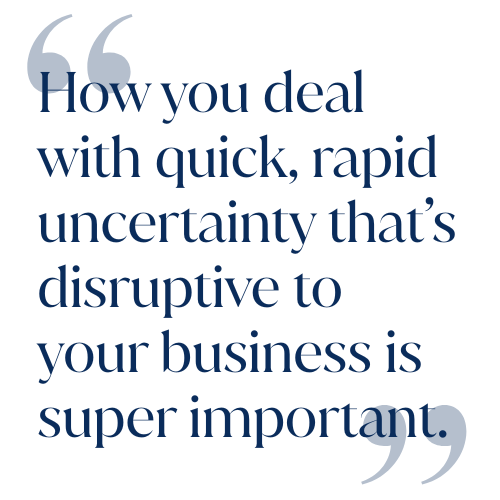
Vialto Partners’ Hugo Vijge added that understanding and mapping disruption is now a core skill. “How you deal with quick, rapid uncertainty that’s disruptive to your business is super important,” he said. More companies are adopting scenario planning, once a Brexit-era exercise to prepare for future crises.
“Collaboration is absolutely the key to our industry's success.”
– Andy Conduit–Turner, Director of Sustainable Growth Enablement, Cartus
Sustainability and ESG were front and centre in the final session, ESG in Mobility: Moving from Compliance to Opportunity.
Andy shared how his team has partnered with landlords to improve the energy efficiency of more than half of their accommodation portfolio. He supported his point about sustainability driving efficiency with several examples:
- Energy efficiency retrofits: Cartus worked with landlords to upgrade more than half of their managed properties, improving insulation and fixtures. These changes lowered utility bills and reduced turnaround times between tenancies, benefiting both client cost control and environmental targets.
- Discard and donate programmes: when employees relocate, Cartus encourages them to donate unwanted items and surplus food rather than dispose of them. This initiative cuts waste-management expenses while supporting local charities and reducing shipping weight, a literal cost and emissions saving.
- Support for sustainable commuting: he mentioned helping employees who choose electric vehicles by arranging EV-charger installations or ensuring access to cycling infrastructure. These choices reduce fuel reimbursements and parking costs while aligning with company ESG goals.

Attending the FEM EMEA Summit was a real highlight. It’s always inspiring to hear how our peers are tackling the challenges and opportunities ahead. I learned so much, enjoyed every discussion, and can’t wait for the next one.
At SilverDoor, we combine data, experience and insight to help our clients make smarter decisions for their people and their future. To explore how SilverDoor can support your global mobility strategy, get in touch today.