As the world undergoes one of the most significant technological transformations since the early 2000s, artificial intelligence (AI) is radically reshaping how we research, manage and make decisions both personally and professionally. Subsequently, investment into AI has proliferated as organisations and their mobile associates look to reap the associated benefits including smarter decision making, personalisation and cost management.
While the growing influence of AI introduces new risks, such as data protection, bias and decisions shaped by inaccurate information, the most forward-thinking travel and mobility leaders are reframing these challenges as catalysts for progress. Rather than creating barriers, they represent a defining opportunity to shape responsible AI governance policies that will not only future-proof programmes, but also elevate traveller experiences.
Reframing Governance Within Business Travel & Global Mobility
Traditional definitions of governance across business travel and employee relocation have typically focused on areas such as policy compliance, supplier management, cost control and traveller duty of care. However, as AI becomes increasingly embedded into traveller lifecycles, these traditional definitions must evolve to mitigate the associated risks of improper AI use within travel and mobility programmes. This is especially important as regulators race to keep up with the rapid evolution of technology.
AI Governance as a Strategic Differentiator
The adoption of AI is progressing rapidly across both corporate environments and traveller behaviour, with nearly a quarter of travellers reporting using generative AI tools for trip planning in late 2025. This is three times as many in 2022 according to a recent report by Deloitte.
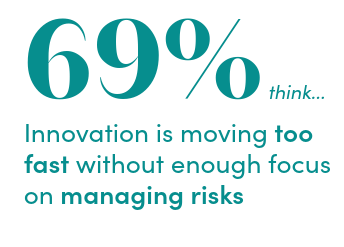
In the same report, researchers also found that 69% of surveyed individuals believe that innovation is happening too quickly without enough attention to risk mitigation. The most interesting finding, however, was that while usage peaked with Millennials and Gen Z, adoption had significantly increased across all age groups.
These findings act as evidence that AI governance is not a consideration for tomorrow's generation, but an opportunity for travel and mobility leaders to make real, tangible impact today.
Talent Management As a Value Enabler
From a talent perspective, and as organisations look to grow market share in some of the most competitive markets globally, the importance of attracting and retaining top talent remains imperative. Travel and mobility leaders can play a meaningful role in supporting organisations to achieve these HR objectives through the adoption of ethical AI practices. In doing so, this will support leaders to build trust with employee populations while simultaneously optimising traveller experiences.

3 ways business travel and global mobility managers can implement meaningful AI practices in the short-term
Despite AI’s unprecedented growth, adoption is far from uniform. Some organisations have fully embraced AI, embedding it into their policies and workflows, while others may only just be starting their journey. The focus, therefore, centres around establishing clear parameters to guide how mobile employees use AI tools for booking and managing travel.
As we consider this, our experts at SilverDoor have compiled their top three ways business travel and mobility managers can take a more responsible and strategic approach to AI.
1. Define Clear Boundaries Around Data and Privacy
Guest data within travel and relocation progammes is often highly sensitive and can typically include details like names, ages, family information, passport, payment and itinerary details to name a few.
Where possible, travel and mobility managers should identify a list of pre-approved AI tools travellers can leverage to book and manage their travel. This might include guidelines for chatbots and AI-generated recommendations, which can guide travellers to use only authorised content and suppliers with robust data security credentials.
Regional considerations will also play an important role. In the EU for example, GDPR sets strict rules around consent, data handling, and how traveller information can be used by AI systems. By contrast, the United States has a more fragmented privacy framework, making it even more important for leaders to work with trusted suppliers who demonstrate strong data governance and privacy practices.
As we look ahead, conducting regular audits of policies and supplier standards will help leaders manage risk, protect traveller data and stay ahead of a very fast-evolving landscape.
2. Establish Human Oversight and Decision Accountability
While AI is rapidly becoming a powerful and highly beneficial tool, we should consider leveraging the tool as an enabler of smarter decision-making, and not a replacement for human judgement.
Key decisions such as complex housing allocations, policy exceptions, and crisis responses can leverage AI to drive smarter and more efficient outcomes, but should never replace human judgement due to their potential implications on traveller wellbeing and total programme cost.
This sentiment is particularly important given the complex supplier ecosystems in which travel and mobility managers exist. Programmes often involve multiple suppliers, each with their own systems, data practices and third-party vendors, making it imperative to establish clear human oversight and approval checkpoints.
Taking such practices into consideration will ensure travel and mobility managers can remain in control of impactful decision making while simultaneously prioritising human accountability within their programme.
3. Align AI Adoption with Programme Goals, Not Tech Hype
It’s easy to get swept up in the momentum of AI, but the most effective travel and mobility programmes are those that adopt it with intention, not impulse. AI should be viewed as a strategic enabler, supporting clearly defined objectives rather than dictating them.
Whether it’s driving cost control, unlocking deeper data analytics, enhancing employee wellbeing, advancing sustainability goals, strengthening compliance, or delivering more personalised traveller experiences, AI’s value lies in how well it aligns with programme priorities and how they contribute to your overarching organisational objectives.
As leaders start their AI journey, the key is to first establish what success looks like, then deploy AI in a way that directly supports those outcomes. By defining clear success metrics and consistently reporting on impact, mobility leaders can ensure AI delivers meaningful, measurable value rather than simply following the hype.
Looking Ahead
As AI continues to reshape the business travel and mobility landscape, the opportunity for leaders is clear: those who act with intention will not only mitigate risk but unlock meaningful competitive advantage.
By establishing strong governance frameworks, maintaining human oversight, and aligning AI adoption with programme and organisational goals, travel and mobility managers can move beyond the hype and harness AI as a true driver of value. In doing so, they position themselves not just as programme managers, but as forward-thinking leaders who contribute to a more ethical and resilient future for the industry.