Shanghai is one of the most significant business destinations in the world, a city of 25 million people, home to the world's busiest container port, and the financial and commercial engine of China. For professionals, it represents one of the most rewarding and occasionally challenging business travel experiences you can take on. The city is modern, efficient, and endlessly dynamic, but it operates by its own rules, and arriving prepared makes a considerable difference.
Here's everything you need to know before you go.
Shanghai Key Information
Getting to Shanghai from the US
Shanghai is served by two international airports: Shanghai Pudong International (PVG) and Shanghai Hongqiao (SHA). For travelers arriving from the United States, Pudong is the primary international gateway.
Direct flights are available from several major US cities. Los Angeles (LAX) and San Francisco (SFO) are the most common departure points, with flight times of approximately 13 to 14 hours. Flights from New York (JFK) typically run around 15 to 16 hours, often with a connection. Chicago, Seattle, and Dallas also offer connections with one stop. It's worth checking both airports when booking, depending on your final destination in Shanghai, one may save you significant travel time on arrival.
Once you land, getting into the city is straightforward. The Shanghai Maglev, one of the fastest passenger trains in the world, runs from Pudong Airport to Longyang Road Station. From Longyang Road, the metro connects to the rest of the city. Alternatively, the metro, shuttle buses, and private transfers all reach the city center in under an hour. Taxis are available but road congestion can add time, particularly during peak hours.
Shanghai is also connected to other major Chinese cities by high-speed rail, with bullet train services running to Hangzhou, Beijing, and Hong Kong, useful if your itinerary extends beyond Shanghai.
A note on jet lag: Shanghai runs on China Standard Time (CST), which is 13 hours ahead of Eastern Time and 16 hours ahead of Pacific Time. That's one of the larger time zones gaps you'll encounter from the US, and it's worth building in at least a day of adjustment before any critical meetings. Read our blog Business Travel Survival: 5 Tips to Beat Jet Lag to best prepare you for your travels.
Visas and Entry Requirements for Shanghai
Entry requirements for China change periodically, and it's essential to check the current rules well in advance of travel rather than relying on information that may be out of date. For current visa requirements and application procedures, US travelers should consult the official visa pages of the Chinese Embassy or the relevant Consulate General for their region (us.china-embassy.gov.cn), and the US State Department's China country page. Requirements can change, so always check both sources close to your travel date. As a general rule, allow more time than you think you need — processing can take several weeks, and requirements can shift with little notice. If you're transiting through Shanghai rather than entering as your primary destination, separate transit visa rules may apply, so confirm your specific situation before travel.
Transport and Getting Around Shanghai, China

Shanghai has one of the most extensive metro systems in the world, with around 20 lines covering the city comprehensively. It's fast, clean, affordable, and the most reliable way to get around, particularly during rush hour when road traffic can be heavy.
Payment on the metro and most other transit has largely moved away from cash. While the Shanghai Public Transportation Card remains available, the majority of locals and regular visitors now use Alipay or WeChat Pay for everything from subway fares to street food. Setting these up before you travel, or as soon as you arrive, will make daily life significantly easier. More on this in the currency section below.
Metered taxis are available and generally safe, though language can be a barrier if your driver doesn't speak English. Having your destination written in Chinese characters, or using a translation app, is strongly recommended. Ride-hailing apps are also widely used in Shanghai.
Walking is a genuinely good option in the main business and tourist districts, Shanghai is a relatively safe city with low crime rates, and many of the key areas are compact enough to cover on foot.
Weather in Shanghai, China

Shanghai has four distinct seasons, and the timing of your trip can make a noticeable difference to the experience.
Summers (June through August) are hot and humid, with temperatures regularly climbing above 95°F. If you're used to East Coast summers, it's comparable but the humidity is persistent and can be draining during a heavy work schedule. Winters (December through February) are cold and damp, averaging around 39 to 45°F, so layering is essential. Spring and fall are widely considered the best times for business travel mild temperatures, lower humidity, and generally more comfortable conditions for a packed itinerary.
Rain is common year-round. Pack a compact umbrella regardless of when you're traveling.
Currency in Shanghai, China

Yuan (¥)
The Yuan is also called the Renminbi (RMB).
China is one of the most cashless societies in the world, and this catches many visitors off guard. Unlike the US, where card payments are universal, Shanghai runs largely on mobile payments specifically Alipay and WeChat Pay. Many restaurants, markets, taxis, and smaller retailers either prefer or exclusively accept digital payments, and some don't take cash or foreign cards at all.
Setting up Alipay or WeChat Pay before you travel is strongly recommended. Both apps now support international credit cards, making setup more straightforward than it used to be. Your hotel or corporate housing front desk will usually be able to help if you run into issues on arrival.
ATMs are available for cash withdrawal, and some international cards work at Bank of China and ICBC machines, but cash should be treated as a backup rather than a primary payment method.
Data in Shanghai, China

Most major US carriers offer international roaming in China, but costs can be significant, check your plan before departure and consider whether a local SIM card makes more financial sense for a longer stay. Local SIMs are available on arrival from China Mobile, China Unicom, and China Telecom.
The more significant issue is internet access. China's firewall blocks a wide range of Western apps and services that American professionals rely on daily, including Google, Gmail, Google Maps, WhatsApp, Instagram, Facebook, and The New York Times. This isn't a minor inconvenience, it can affect navigation, communication, and basic workflow.
The solution is a VPN, and the critical point is that it must be installed and tested before you arrive. Once you're in mainland China, accessing VPN providers' websites to download their apps becomes considerably more difficult. Set it up at home, confirm it works, and you'll have no issues. Leave it until you land and you may find yourself without the tools you depend on for the duration of your trip.
For communication, WeChat is the dominant messaging platform in China and is widely used in business contexts, downloading it before you travel and familiarizing yourself with it is worthwhile.
Plug types: China uses Type I and Type A sockets. American travelers will find their standard two-pin plugs (Type A) work in Type A sockets without an adapter, but a universal travel adapter is recommended to cover all bases.
Note: US travelers to China may also need a voltage converter – China runs on 220V vs the Us standard of 120V. Modern electronics (laptops, phone chargers etc) handle this automatically if rated 100-240V, but hair dryers and otherUS heat appliances may need a voltage converter.
Emergency contact numbers:

- Police: 110
- Fire: 119
- Ambulance: 120
Health and Wellbeing in Shanghai, China

Shanghai has excellent private healthcare facilities, and most major hospitals in the city have international wings with English-speaking staff. Travel health insurance with medical evacuation coverage is strongly recommended for any business trip to China, check that your policy covers the full duration of your stay.
Air quality in Shanghai has improved considerably in recent years, though travelers with respiratory conditions may want to monitor local conditions, particularly in winter months. The city's parks offer a genuinely good escape from the pace of the business district: Century Park in Pudong, Fuxing Park in the French Concession, and Gongqing Forest Park in Yangpu are all worth seeking out for a morning run or an evening walk.
Modern fitness centers are widely available, and most corporate housing will have gym access either on-site or nearby.
Top Sights in Shanghai
Shanghai rewards the business traveler who carves out time to explore. Here are five things worth prioritizing during your visit.
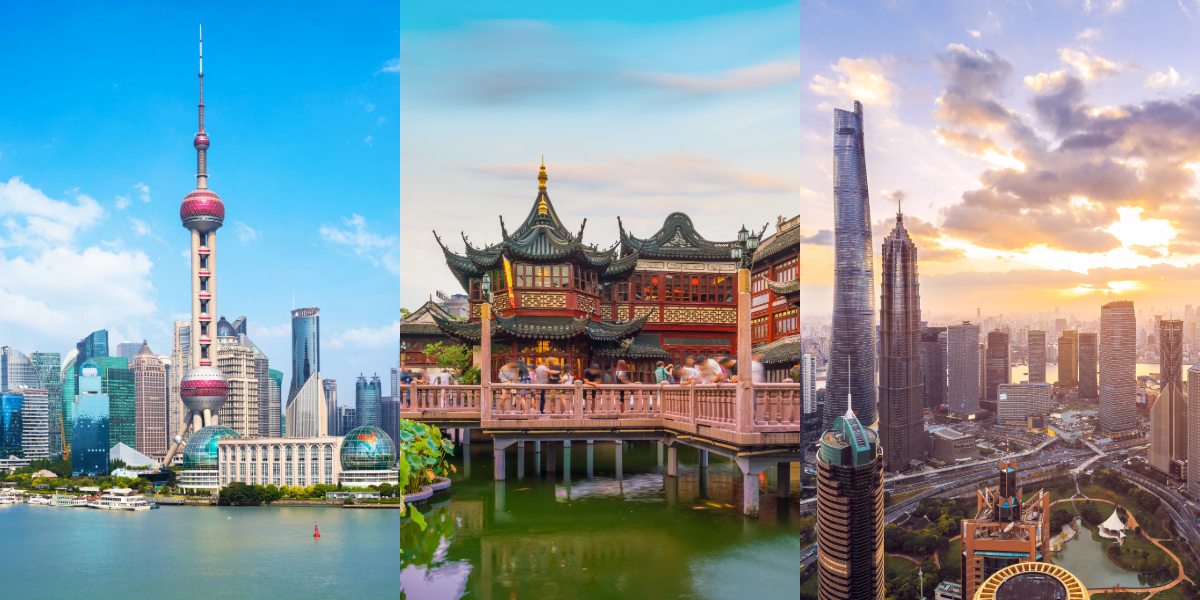
The Bund is Shanghai's most iconic stretch - a historic waterfront promenade running along the Huangpu River, lined with grand colonial-era architecture on one side and the futuristic Pudong skyline on the other. An early morning or evening walk along the Bund is one of the most memorable things you can do in the city, and it's free.
The Oriental Pearl Radio and TV Tower is one of Shanghai's most recognizable landmarks, with observation decks, a revolving restaurant, and the Shanghai History Museum housed inside. Worth visiting once for the perspective it gives you on the scale of the city.
Yu Garden - known as the Garden of Happiness - is the oldest surviving green space in Shanghai and the only remaining Ming Dynasty garden in the city. A tranquil escape from the surrounding pace, and a short walk from the historic Huxinting Tea House.
Shanghai Tower is China's tallest building and one of the tallest in the world. The observation deck is reached via some of the fastest elevators on the planet, and the views on a clear day are extraordinary.
People's Square and Nanjing Road - People's Square sits at the geographic and cultural center of the city, home to the Shanghai Museum, the Shanghai Grand Theatre, and the Shanghai Urban Planning Exhibition Hall. It leads directly onto Nanjing Road, one of the busiest and most famous shopping streets in China.
Cuisine in Shanghai, China

Shanghai's food scene is exceptional by any measure with more than 50 Michelin-starred restaurants, a thriving street food culture, and an international dining scene that reflects the city's cosmopolitan character. For visitors, the range and quality is genuinely impressive, and the price point at the mid-range level is considerably lower than comparable dining in New York or San Francisco.
A few dishes worth seeking out during your stay:
Xiao Long Bao - Shanghai's signature dish. Delicate soup dumplings filled with pork and a rich broth, served in bamboo steamers. The technique required to eat them without losing the broth is a skill worth acquiring early in your trip.
Baozi - fluffy steamed buns filled with pork, vegetables, or sweet red bean paste. A staple street food and a good breakfast option.
Peking Duck - crispy roasted duck served with thin pancakes, scallions, and hoisin sauce. Available across the city and a reliable choice for a business dinner.
The Wujiang Road area and the surrounding Jing'an district are worth exploring for street food, including the original Yang's fried dumpling. Fresh seafood is widely available given Shanghai's coastal location, and the French Concession neighborhood has a strong concentration of international restaurants if you need a familiar reference point mid-trip.
Language in Shanghai, China

Mandarin (Putonghua) is Shanghai's official language. English is spoken in business settings, but outside of those environments, a translation app is invaluable, Google Translate works well if you have a VPN set up, and the camera translation feature is particularly useful for menus and signage.
A few basic phrases go a long way in terms of goodwill:
Hello — 你好 (Nǐ hǎo)
Goodbye — 再见 (Zàijiàn)
Good morning — 早上好 (Zǎo shàng hǎo)
Thank you — 谢谢 (Xièxiè)
You're welcome — 不客气 (Bù kèqì)
Conference and Event Venues
Shanghai has a strong infrastructure for business events. The Shanghai New International Expo Centre (SNIEC) is one of the largest exhibition venues in Asia, with 11 halls hosting major regional and international trade shows throughout the year. The Shanghai Exhibition Center, Shanghai International Conference Center, and the Everbright Convention and Exhibition Center all host regular conferences, exhibitions, and corporate events and are well set up for international attendees.
Shanghai Business Culture

Hierarchy is central. Seniority is observed carefully in Chinese business settings, the most senior person in a delegation typically enters a room first, and seating arrangements often reflect rank. Being aware of this, and showing appropriate deference to senior counterparts, is noticed and appreciated.
Decisions take time. Chinese business culture places greater emphasis on relationship-building and consensus and pushing for fast decisions can be counterproductive. Patience and a willingness to invest in the relationship before closing are both assets.
Business cards are exchanged with both hands and should be received and examined with genuine attention rather than pocketed immediately. Bringing cards with a Chinese translation on the reverse is a thoughtful touch that tends to be well received.
Small talk and warmth are valued. Being personable and genuinely interested in your counterparts builds the kind of trust that Chinese business relationships are built on.
For extended business stays, corporate housing is almost always a better option than a hotel room. The additional space, kitchen facilities, and residential feel make a meaningful difference to daily comfort and productivity.
SilverDoor has a regional office in Shanghai with a team of on-the-ground experts who can advise on every aspect of your booking and ensure you find the right furnished apartment for your needs, location, and budget. Whether you're traveling solo or with colleagues, one-bedroom through to three-bedroom options are available across the city's key business districts.
Browse our full range of corporate housing in Shanghai or get in touch with our team directly, they'll be happy to help.