Staying in Riyadh, Saudi Arabia
The name Riyadh translates from Arabic as "gardens," though today the Saudi capital is a city defined by ambition and steel as much as by its desert surroundings. Emblematic of the region's extraordinary growth, the skyline is dense with high-rise developments, brightly lit against the vast desert landscape. With many of the Kingdom's major banks headquartered here, a thriving financial sector, and one-third of Saudi Arabia's factories, Riyadh is a key financial and manufacturing hub that attracts a large and well-established expatriate community and business travelers.
The heart of the Arabian Peninsula, Riyadh is also a city where ancient traditions meet futuristic visions. Visitors can wander through historic souqs where the scent of spices fills the air, gaze upon gleaming skyscrapers, explore world-class museums, and discover a burgeoning arts and entertainment scene - all driven by the country's Vision 2030 reform agenda. From the majestic Diriyah, a UNESCO World Heritage Site, to the bustling King Abdullah Financial District, Riyadh offers a journey through Saudi Arabia's past, present, and future.
Whether you are relocating and joining Riyadh's considerable expat community or visiting for corporate commitments, this business travel guide to Riyadh covers everything you need to know before you arrive.
Key Information for Visiting Riyadh
Weather in Riyadh

Riyadh has a desert climate - hot summers, mild winters, and very little rainfall year-round. Saudi summers are notoriously intense: between April and October, temperatures regularly average above 86°F (30°C) and can exceed 104°F (40°C), with extreme peaks reaching 122°F (50°C). Occasional rain falls in March and April, and sandstorms can occur during transitional months. Winters, from November through February, are mild and pleasant, with daytime temperatures typically in the mid-60s to mid-70s°F - the most comfortable time of year for business travel.
Given the heat and consistent air conditioning throughout buildings and transport, a breathable wardrobe with light layers for indoors is the practical approach year-round.
Business Week in Riyadh
The Saudi working week runs Sunday through Thursday. Friday is the Islamic day of rest - equivalent to Sunday in many Western countries - and is observed widely across government, schools, and businesses. Saturday is also generally a rest day. Plan meetings and travel schedules accordingly when coordinating across time zones.
Currency in Riyadh

The currency in Riyadh is the Saudi Riyal (SAR), which is divided into 100 halalas. ATMs are available throughout the city, and card and digital payments - including Apple Pay and other contactless options - are widely accepted. Some smaller shops may apply a surcharge for card payments. Cash tips are generally preferred in restaurants (around 10–15%), for tour guides, and for housekeeping staff, so keeping a supply of small bills on hand is always useful. Tipping is not mandatory but is increasingly common and appreciated across the service industry.
Health and Well-Being in Riyadh

Due to the intensity of the summer heat - and ongoing large-scale construction across the capital - Riyadh is not a walking city. Getting around by ride-hailing app or private car is the standard approach.
For outdoor exercise and green space, Riyadh has more to offer than its desert reputation suggests. Al Nahda Park, a long linear park along Nahdah Road in east Riyadh, has brick-paved running paths and is one of the better options for longer-distance runs in the city. Wadi Hanifa, the longest valley near Riyadh stretching around 80 kilometers through the Najd Plateau, has been extensively rehabilitated and now features scenic walking and cycling trails, parks, lakes, and picnic areas - and has won the Aga Khan Award for Architecture for its restoration. It is best visited outside of peak summer months.
For hiking, Camel Trail is a popular choice, and the Tuwaiq Escarpment offers dramatic sunset views on what is one of the most well-known routes near the city. Given the high temperatures for much of the year, gyms and indoor fitness classes are a practical and widely available alternative. Women-only gym facilities are available across the city.
Jogging and cycling are accepted in public for both men and women, though modest dress in keeping with Saudi Arabia's Public Decorum Charter is expected.
Entertainment and Culture in Riyadh
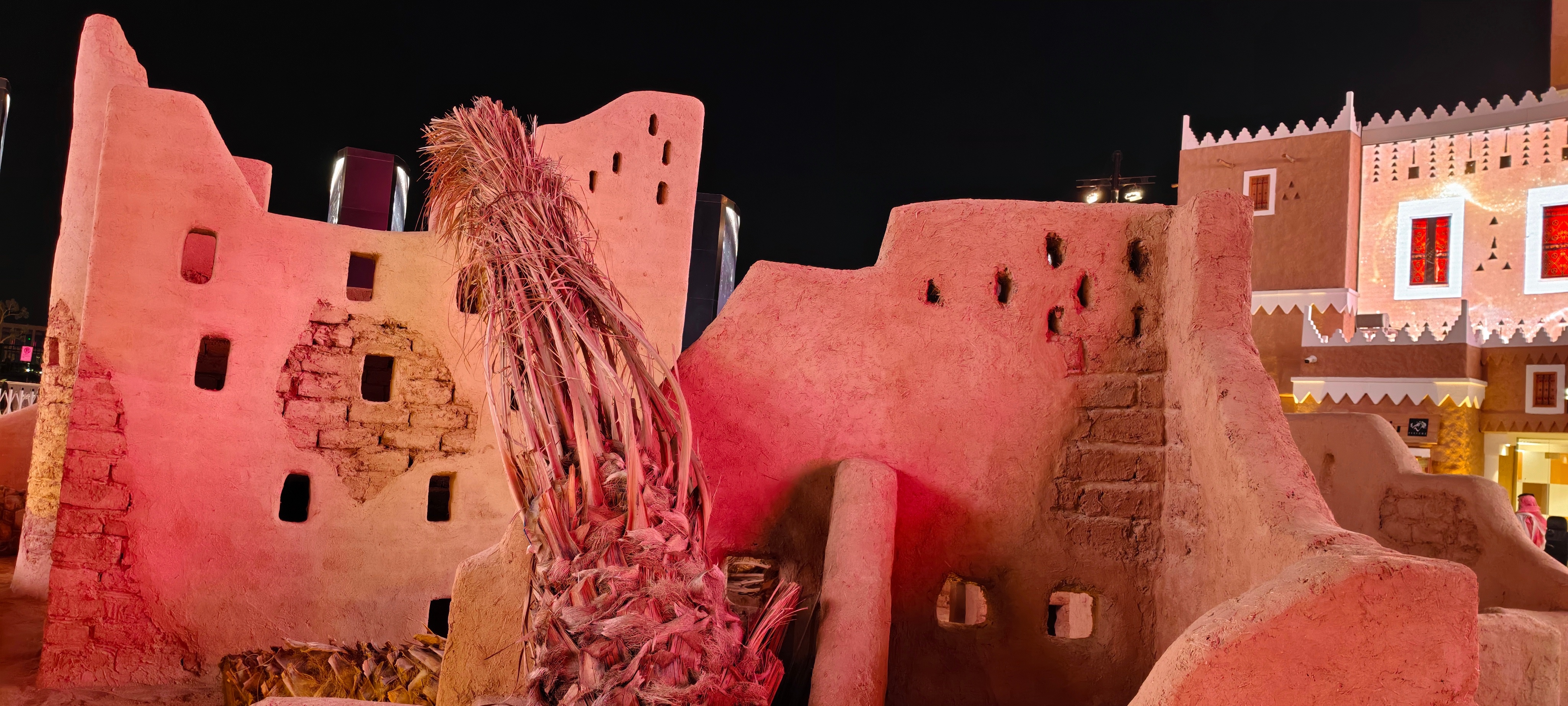
Riyadh's entertainment landscape has been transformed under Vision 2030. Riyadh Season - a major annual festival running from October to March - brings concerts, sporting events, art shows, international pop-ups, and large-scale food experiences to the city, and is now one of the largest entertainment events in the Middle East.
Diriyah, a UNESCO World Heritage Site on the northwestern edge of the city, is the ancestral home of the Saudi royal family and one of the most historically significant sites in the Kingdom - now also home to a growing cultural, dining, and hospitality destination. Al Masmak Palace, a 19th-century mud-brick fortress in the heart of the old city, offers a compelling introduction to Saudi history and the unification of the Kingdom. The National Museum of Saudi Arabia is another essential visit, while the Edge of the World - a dramatic natural escarpment approximately 60 miles from the city center - provides one of the most spectacular landscapes in the region.
Kingdom Centre Tower, with its iconic sky bridge offering panoramic views over the city, is one of Riyadh's most recognizable landmarks and a useful orientation point in the Olaya district.
Alcohol is not available in Saudi Arabia. Hotels are developing venues with non-alcoholic cocktails and mocktail menus, but there are no current plans to legalize alcohol for the general public or for tourists.
Note that cities across Saudi Arabia, including Riyadh, are under extensive and active construction. It is highly likely that you will encounter construction sites, cranes, and infrastructure works from your apartment or office window, as the country continues its robust transformation.
Cell Service and Mobile Data in Riyadh

Free Wi-Fi is available in most hotels, restaurants, and cafés, keeping you connected when out and about. You will need to be a resident with an Iqama (resident permit) to obtain a cell phone plan in Saudi Arabia. Visitors can purchase a prepaid SIM card at the airport or from kiosks in major shopping malls - valid ID is required to register.
STC SIM cards offer extensive 4G and 5G coverage across Riyadh and are a reliable option for visitors. Ensure your phone is SIM-unlocked before you arrive so you can swap to a local SIM card without issue. 5G is widely available across the city and continues to expand rapidly.
Plug Type
Saudi Arabia uses Type G electrical outlets - the same three-pin plug standard used in the United Kingdom - operating at 220V/50Hz. US travelers will need both a plug adapter and a voltage converter for any devices that are not dual-voltage (most modern laptops and phone chargers are dual-voltage; check the label on your device). Bring the appropriate adapter before arriving.
Emergency Contacts in Riyadh

For all emergency services in Saudi Arabia, dial 911.
Communication and Business Etiquette in Riyadh

Arabic is the official language of Saudi Arabia. English is widely spoken in business settings, hotels, and expatriate communities — it is also a compulsory second language taught in Saudi schools, meaning a good level of English comprehension is common across the city.
Relationship-building and trust are central to professional culture in Saudi Arabia. Expect small talk and personal connection before getting into business — skipping this step can come across as abrupt or disrespectful. Communication tends toward indirectness as a sign of politeness; you may hear phrases such as "inshallah" (God willing) or "we'll see" where a Western counterpart might give a direct refusal.
Always offer and receive items with your right hand, and receive business cards with both hands as a sign of respect. Avoid using your left hand to shake hands, pass objects, or eat. Be mindful of non-verbal communication, avoid pointing at others, ask permission before photographing someone, and do not display public affection.
A few useful Arabic phrases:
- As-salamu alaykum — Peace be upon you (standard greeting)
- Wa alaykum as-salam — And upon you peace (standard response)
- Kaifa halak? (to a man) / Kaifa halik? (to a woman) — How are you?
- Min fadlak (to a man) / Min fadlik (to a woman) — Please
- Shukran — Thank you
- Tasharrafna — Nice to meet you
- Momken al-fatura, law samaht? — May I have the bill, please?
- Hal tatakallam al-Ingliziya? — Do you speak English?
Religion and Cultural Awareness in Riyadh
Saudi Arabia is a deeply Islamic society, and awareness of Islamic practices will significantly improve your experience as a business traveler.
Friday is the most important day of the week - businesses, government offices, and schools are typically closed or operate reduced hours. Observant Muslims pray five times daily, and you will hear the adhan (call to prayer) across the city during these times. Remaining quiet and respectful during prayer windows is expected. Some services and shops may pause briefly during prayers, particularly on Fridays.
Dress code: Modest dress is expected for all visitors and governed by Saudi Arabia's Public Decorum Charter. As a general rule, ensure shoulders, legs, and chest are covered in public. Opt for loose-fitting clothing that covers to the elbow and below the knee to show respect for local customs. Women should cover their head and hair when visiting religious sites such as mosques. In business settings, business formal attire is the standard.
Entering homes and mosques: Remove your shoes when entering someone's home. Shoes must also be removed before entering mosques and other places of worship.
Children in restaurants: Children are welcome in many restaurants, but for finer dining venues it is worth calling ahead to confirm any restrictions.
Gender amenities: Gender-specific facilities are common across public spaces in Saudi Arabia, including sections in gyms, government buildings, and some retail environments. However, restaurants, entertainment venues, and offices in cities like Riyadh have largely relaxed segregation requirements in recent years. Separate entrances for men and women may still be found in some older establishments.
Unmarried partners: Women and men are now permitted to share temporary accommodation, even if unmarried. For longer-term assignments requiring residential accommodation, check the specific policies of your compound, as rules on unmarried partners living together vary and regulations continue to evolve - verify this closer to your assignment start date.
Riyadh Cuisine

Riyadh's dining scene is diverse and rapidly evolving, ranging from traditional Saudi hospitality to contemporary international fine dining.
Traditional Najdi Cuisine: The food of the Najd region - the heartland of Saudi Arabia - forms the backbone of Riyadh's culinary identity. Expect dishes built around lamb, rice, dates, and slow-cooked stews. Kabsa (spiced rice with meat) is the national dish. Other standout dishes include Jareesh (ground wheat cooked with rice, onion, vegetables, and chicken), Qursan (layers of thin flatbread topped with tomato and vegetable sauce, fresh onions, and parsley), and Matazeez (flat dumplings cooked in a vegetable, tomato, and meat stew).
Coffee Culture: Saudi coffee - known as qahwa - is a light, cardamom-spiced brew served in small cups and is central to hospitality and business culture. Elegant coffee houses are a core part of daily social life in Riyadh.
International Dining: As a global business hub, Riyadh offers strong options across Japanese, Italian, Middle Eastern, and contemporary fusion cuisine, with a growing number of international-brand restaurants.
Grocery Shopping: Popular chains including Panda, Tamimi Markets, Carrefour, and Danube are clean, well-stocked, and easy to navigate. Many are open late, and some offer 24-hour service. Food delivery apps HungerStation and Jahez are widely used across the city and support English-language interfaces and cashless payments. Note that pork and pork products are strictly prohibited across Saudi Arabia and are not available anywhere in Riyadh.
Transportation in Riyadh

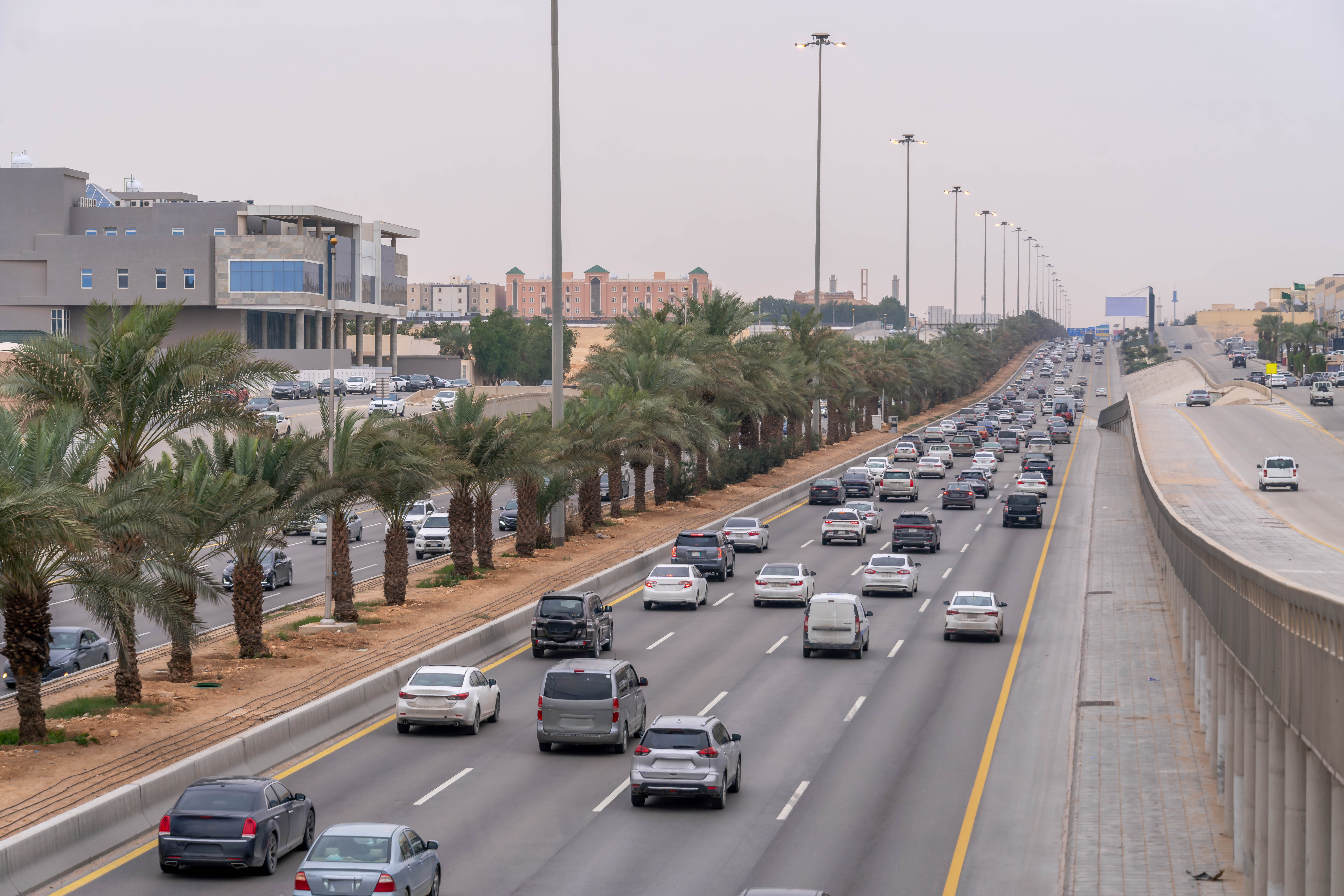
Riyadh is a driving city. Traffic is heavy, particularly during peak hours and on Fridays, and some services may slow around prayer windows. Plan travel times generously for any appointment-critical journey.
Riyadh Metro: Fully operational since January 2025, the Riyadh Metro is a landmark infrastructure achievement — recognized by Guinness World Records as the world's longest fully automated, driverless metro network, spanning 176 km across 85 stations on six color-coded lines. The network covers residential districts, business centers, universities, hospitals, and major landmarks across the capital. Gender-segregated carriages — family, single male, and women-only — are available on all lines. Tickets start at SAR 4 for a two-hour pass and are available via the DARB app, station kiosks, or staffed counters. The metro runs daily from 6:00 AM to midnight, with trains running every 3–5 minutes during peak hours.
Buses: The Riyadh Bus network — operated as part of the King Abdulaziz Public Transport Project — now covers 87 routes across 1,900 kilometers, serving over 3,000 stops across the city. Fares are paid using a rechargeable smart card or via the DARB app, which integrates both metro and bus services with real-time tracking. Buses operate from 5:30 AM to 11:30 PM daily.
Intercity Rail: Two passenger train routes connect Riyadh to other Saudi cities: the North Train (with overnight service to Qurayyat) and the East Train (running between Riyadh and Dammam). A high-speed rail service also connects Mecca and Medina, though the Mecca station is accessible to Muslims only.
Ride-Hailing: Uber and Careem operate widely across Riyadh and are the most convenient option for flexible, point-to-point travel. Both apps are affordable and reliable. Local metered taxis are also available. Women should sit in the back seat when traveling by taxi.
Airport: King Khalid International Airport (IATA: RUH) is located approximately 22 miles (35 km) north of the city center. It is one of the busiest airports in the Middle East and connects Riyadh to a wide range of domestic and international destinations. The airport is directly served by Line 4 (Green Line) of the Riyadh Metro, providing a traffic-free link into the city. Uber, Careem, and airport taxis are also available from both terminals.
Key Districts in Riyadh
King Abdullah Financial District (KAFD): Riyadh's purpose-built central business district, home to major financial institutions and multinational offices. The KAFD metro station - designed by Zaha Hadid Architects - is one of the network's four iconic main hubs.
Olaya / Al Olaya: The city's primary commercial spine, running along King Fahd Road. Home to office towers, luxury hotels, major retail malls, and the landmark Kingdom Centre Tower.
Diriyah: The historic heart of the Saudi state and a UNESCO World Heritage Site, now developing into a major cultural, dining, and hospitality destination on the city's northwestern edge.
Al Batha / Historic Center: The old commercial and cultural core of Riyadh, home to Al Masmak Palace, the Grand Mosque, and traditional souqs (bazaars).
Sustainability in Riyadh
Under Vision 2030, Riyadh is pursuing one of the world's most ambitious urban sustainability programs. The Green Riyadh initiative - launched in 2019 - aims to plant 7.5 million trees citywide using 72 native species, supported by a daily supply of 1 million cubic meters of recycled irrigation water. The program is designed to combat desertification, improve air quality, reduce urban heat, and enhance quality of life across the capital.
The Riyadh Metro is itself central to the city's sustainability goals - reducing private vehicle use, cutting carbon emissions, and supporting Saudi Arabia's broader environmental targets under Vision 2030.
Corporate Accommodation in Riyadh
With this guide, you should feel well prepared for your corporate stay in Riyadh.
If you are looking for accommodation, browse our range of corporate apartments in Riyadh for business travelers. Offering more space, flexibility, and privacy than a standard hotel room, corporate serviced apartments are the preferred choice for extended business trips and corporate relocations. Please contact us if you have any questions or specific requirements regarding your stay.